Obama Stumbles on Glass-Steagall

How Novel!

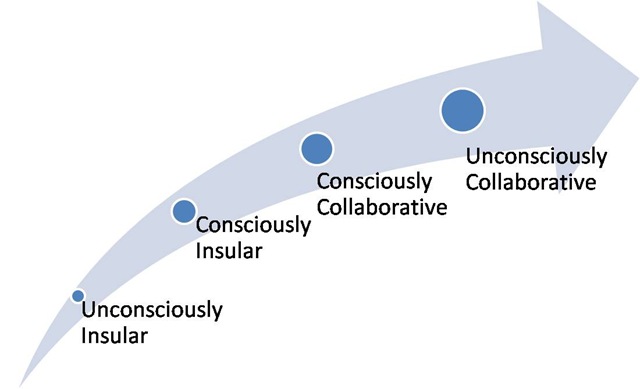
It looks like Barack Obama has reverted back to stage one of the Obama Learning Curve, ‘unconsciously insular’.
Click to Enlarge


His latest bright idea involves re-instituting the Glass-Steagall Act of 1933. Could this possibly be the same kind of overreaction which helped to prolong the Great Depression? After all, the Depression didn’t officially end until 1941. Obama constantly blames the 8 year Presidency of George W. Bush for our current economic woes, yet Glass-Steagall was repealed in 1999. I mean all you hear from this guy is the same tired whine about the ‘failed policies of the Bush Administration’. But then what does he do? He reverts to the failed policies of the FDR Administration.

Background

“In 1933, in the wake of the 1929 stock market crash and during a nationwide commercial bank failure and the Great Depression, two members of Congress put their names on what is known today as the Glass-Steagall Act (GSA). This act separated investment and commercial banking activities. At the time, “improper banking activity”, or what was considered overzealous commercial bank involvement in stock market investment, was deemed the main culprit of the financial crash. According to that reasoning, commercial banks took on too much risk with depositors’ money…”

I thought our current dilemma was caused by a housing related bubble, not by commercial banks investing too much money in the stock market. In our time, banks took on too much risk by investing in risky home loans. Loans which were promoted by ‘liberal’ politicians under the false ideology that it was somehow a Natural, God-given, Right for everyone to own a home.

Reasons for the Act – Commercial Speculation

“Commercial banks were accused of being too speculative in the pre-Depression era, not only because they were investing their assets but also because they were buying new issues for resale to the public. Thus, banks became greedy, taking on huge risks in the hope of even bigger rewards. Banking itself became sloppy and objectives became blurred. Unsound loans were issued to companies in which the bank had invested, and clients would be encouraged to invest in those same stocks.”

Hmmm. This doesn’t even sound remotely related to our present woes.

Effects of the Act – Creating Barriers

“Senator Carter Glass, a former Treasury secretary and the founder of the U.S. Federal Reserve System, was the primary force behind the GSA. Henry Bascom Steagall was a House of Representatives member and chairman of the House Banking and Currency Committee. Steagall agreed to support the act with Glass after an amendment was added permitting bank deposit insurance (this was the first time it was allowed).”

It is interesting to note that even Glass himself moved to repeal the GSA shortly after it was passed, claiming it was an overreaction to the crisis.

An Overreaction to the Crisis?

It seems to me that all Obama has done is to stumble upon a method of prolonging the economic crisis. Instead of embracing obvious policies which have helped America out of every single recession since World War II (i.e. across the board tax cuts, and allowing the free market to correct itself), Obama has not only failed to come up with new ideas, he has ‘dug up’ the old tried and failed policies of the 1930’s. And this is the guy you were waiting for?

Barack ‘Carter Glass’ Obama could do us all a favor by just getting out of the way. If he would just sit down and hush up, the free market will eventually reach equilibrium. Sometimes it’s best not to meddle. You know what they say, “Jack of all trades; Master of none.”

Finally, what was it again which finally broke the Great Depression?

“Only when the federal government imposed rationing, recruited 6 million defense workers (including women and African Americans), drafted 6 million soldiers, and ran massive deficits to fight World War II did the Great Depression finally end.”

Is it possible that the War on Terror was our salvation, and not a mistake?

____________________________________

http://www.nps.gov/archive/elro/glossary/great-depression.htm
http://www.investopedia.com/articles/03/071603.asp

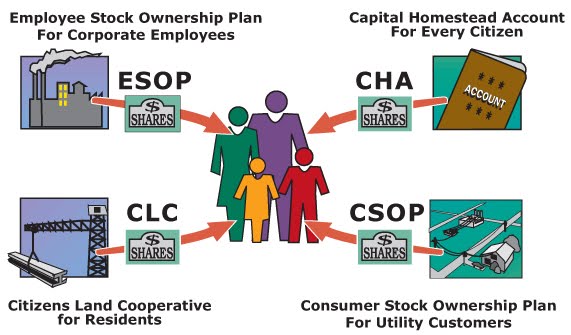
Capital Homestead Act: A Plan for 2012

By: Larry Walker Jr.

“For a binary solution needed to restore free markets, private property and limited government, why not focus on getting political leaders to pass a Capital Homestead Act by 2012, the 150th anniversary of Lincoln’s Homestead Act?” – Norm Kurland

We have to cast down this insidious idea that a socialist (anti-free market) system is best, lest there be no free market left with which to institute Capital Homesteading. It is clear from the policies being implemented by the current administration, that Mr. Obama will not be our ally. We must work to defeat these anti-free market ideals in the 2010 and 2012 elections. And we will defeat them, one brick at a time.

But what do conservatives have to offer? There is a solution for saving Social Security and Medicare, for eliminating payroll taxes, and which will help all Americans to be able to provide for themselves. It’s called the Capital Homestead Act.

Summary

The Capital Homestead Act is a comprehensive national economic strategy for empowering every American citizen, including the poorest of the poor, with the means to acquire, control and enjoy the fruits of productive corporate assets.

This long-range agenda involves major restructuring of our tax system and our Federal Reserve policies to lift unjust artificial barriers to more equitable distribution of future corporate capital and faster growth rates of private sector investment. It would shift primary national income maintenance policies from inflationary wage and unproductive income redistribution expedients to market-based ownership sharing and dividend incomes.

The Capital Homestead Act’s central focus is the democratization of capital (productive) credit. By universalizing citizen access to direct capital ownership through access to interest-free productive credit, it would close the power and opportunity gap between today’s haves and have-nots, without taking away property from today’s owners.

The Goals of the Capital Homestead Act

As summarized below, the Capital Homestead Act is designed to:

  1. Generate millions of new private sector jobs by lifting ownership-concentrating Federal Reserve credit barriers in order to accelerate private sector growth linked to expanded ownership opportunities, at a zero rate of inflation.

  2. Radically overhaul and simplify the Federal tax system to eliminate budget deficits and ownership-concentrating tax barriers through a single rate tax on all individual incomes from all sources above basic subsistence levels. Its tax reforms would:

    • eliminate payroll taxes on working Americans and their employers;

    • integrate corporate and personal income taxes; and

    • exempt from taxation the basic incomes of all citizens up to a level that allows them to meet their own subsistence needs and living expenses, while providing “safety net” vouchers for the poor.

Read More Here…

Washington vs Wall Street: The Audacity

– By: Larry Walker Jr –

Our ‘unconsciously insular’ President, Barack Obama, on Saturday slammed Wall Street’s “audacity” for fighting a bailout fee he wants to slap on financial firms and said his Republican opponents had sided with big banks (here).

Meanwhile, his Chief Critic, poses this question: ‘Where would you rather invest your money?’

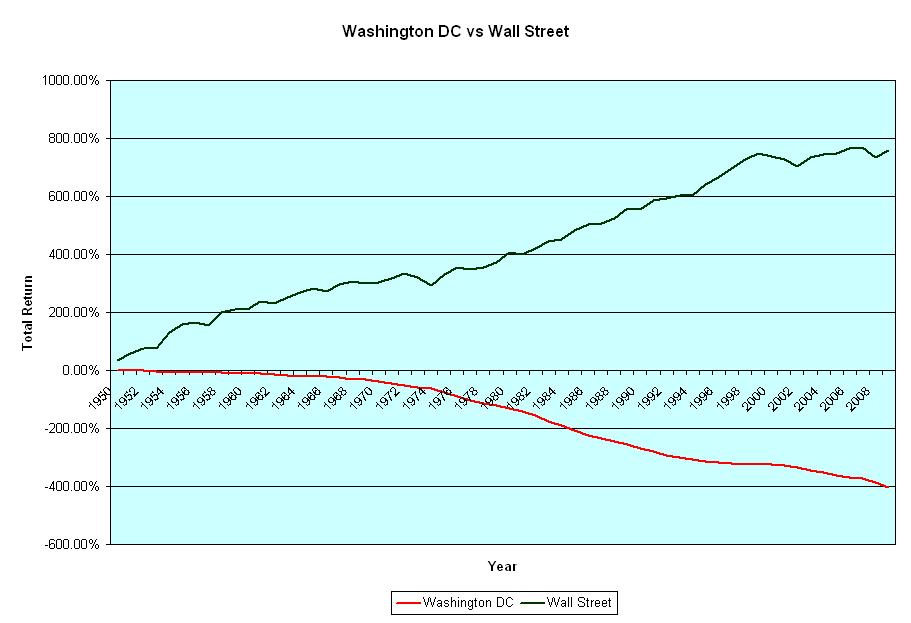
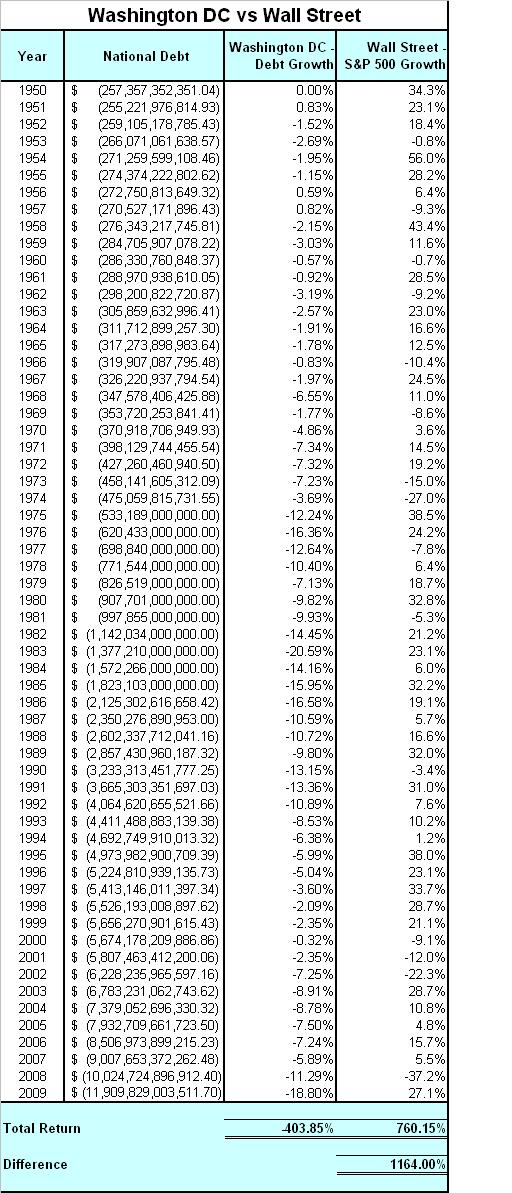
While Washington, DC has done an excellent job in growing the National Debt, Wall Street has been busy actually creating wealth and opportunities for millions of Americans.

Click to Enlarge

In comparing the total loss produced by the Federal government, to the total return ‘earned’ by investing in the S&P 500, from 1950 through 2009, I’ll go with Wall Street. While Washington, DC netted a total loss of -403.85% for taxpayers over the period, Wall Street produced a total return for investors of +760.15%. This is not rocket science. Thanks but no thanks Mr. Obama.

Conclusion

Wall Street outperformed Washington, DC by 1,164.0% over the last 59 years. While Obama seeks to win political brownie points, in the real world his warped ideals don’t pass the logic test. I would suggest to Mr. Obama, that he concentrate on figuring out how to shrink the size of the Federal government’s budget and the national debt, and keep his nose out of the private sector.

Clearly Obama has no future in the world of finance. Perhaps when he retires, which will be in just a couple of years, he could entitle his next book, “The Audacity of Irresponsibility”.

: Data Table

Data Sources:

http://www.treasurydirect.gov/

http://www.moneychimp.com/features/market_cagr.htm

Not Accountable – It’s Your Government

By: Larry Walker Jr

The United States Government Accountability Office says major impediments are preventing GAO from rendering an opinion on the federal government’s financial statements, the federal government did not maintain effective internal controls over financial reporting and compliance with significant laws and regulations due to numerous material weaknesses, and financial management system problems continue to hinder federal agency accountability. I’m just wondering whether the situation is improving as we trudge down Obama’s disastrous path.

My view is that it’s unwise to radically increase the size of any enterprise, which has an unsound and unreliable financial infrastructure. In my opinion the federal government is on an unsustainable path. I strongly question the federal governments ability to continue as a going concern. If the federal government were a publicly traded corporation, its CEO would be in prison. Just imagine the auditors of Bank of America, or AIG stating that they are unable to render an opinion because the entire financial structure is not accountable.

Here is what the GAO found in its latest July 8, 2009 report, followed by a link to the full report:

FISCAL YEAR 2008 U.S. GOVERNMENT FINANCIAL STATEMENTS

What GAO Found

For the second consecutive year, GAO rendered an unqualified opinion on the Statement of Social Insurance; however, three major impediments continued to prevent GAO from rendering an opinion on the federal government’s accrual basis consolidated financial statements: (1) serious financial management problems at the Department of Defense, (2) the federal government’s inability to adequately account for and reconcile intragovernmental activity and balances between federal agencies, and (3) the federal government’s ineffective process for preparing the consolidated financial statements. In addition, as of September 30, 2008, the federal government did not maintain effective internal controls over financial reporting and compliance with significant laws and regulations due to numerous material weaknesses. Moreover, financial management system problems continue to hinder federal agency accountability.

The federal government still has a long way to go, but over the years, progress has been made in improving federal financial management. For example, audit results for many federal agencies have improved; federal financial system requirements have been developed; and accounting and reporting standards have continued to evolve to provide greater transparency and accountability over the federal government’s operations, financial condition, and fiscal outlook. In addition, the federal government issued a summary financial report which is intended to make the information in the Financial Report of the U.S. Government more understandable and accessible to a broader audience.

The federal government’s response to the financial markets crisis and economic downturn has created new federal accountability, financial reporting, and debt management challenges. Such challenges will require utmost attention to ensure (1) that sufficient internal controls and transparency are established and maintained for all market stabilization and economic recovery initiatives; (2) that all related financial transactions are reported on time, accurately, and completely; and (3) these initiatives are effectively and efficiently financed. moreover, while policymakers are currently understandably focused on efforts directed toward market stabilization and economic growth, once stability in financial markets and the economic downturn are addressed, attention will have to be turned with the same level of intensity to the serious longer-term challenges of addressing the federal government’s large and growing structural deficits and debt.

Finally, the federal government should consider the need for further revisions to the current federal financial reporting model to recognize its unique needs. A broad reconsideration of issues, such as the kind of information that may be relevant and useful for a sovereign nation, could lead to reporting enhancements that might help provide the Congress and the President with more useful financial information to deliberate and monitor strategies to address the nation’s long-term fiscal challenges.

http://www.gao.gov/new.items/d09805t.pdf

Give Me a Tax Cut, or Give Me Death II

Small Business Tax & Toil

By: Larry Walker, Jr.

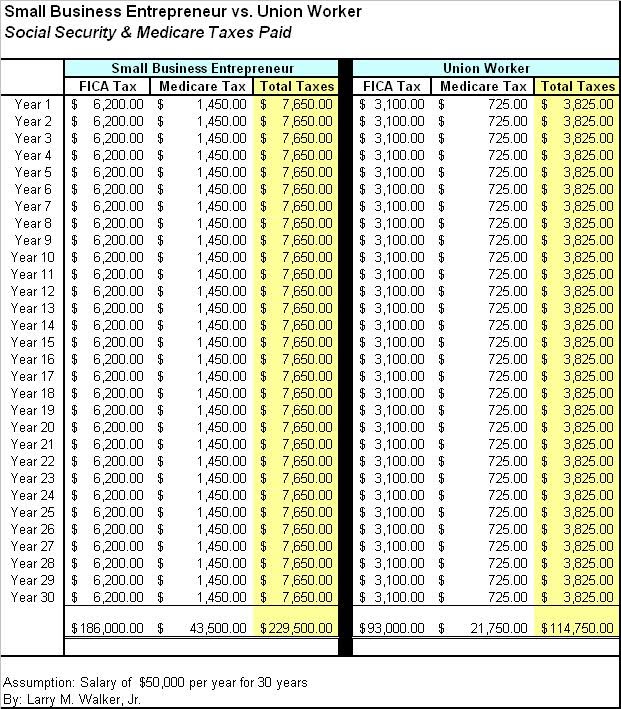
Small business owners, like myself, pay twice as much in Social Security and Medicare Taxes as regular employees. Yet when we ask for a payroll tax cut on our own pay, what we get from the government is a crackdown on regional banks to give us more loans. Aside from the fact that 140 of these banks have failed since January 16, 2009 (here), what Obama’s Cluelessian economists fail to understand is that wealth is not created through amassing debt.

If Obama wants to run the Federal Government based on the myth that wealth is created through debt, that’s one thing, but his attempt to sell this ideal to small business owners like myself makes him look inept. Small businesses are already in debt. Adding more debt does not translate directly into increased sales, but rather into higher monthly principal and interest payments (aka. ‘paying current expenses out of future income’). It’s one thing to borrow money to start a venture, or to secure lines of credit for working capital, but it’s entirely another to pile debt upon debt in a degenerating economy.

Wealth is created by increasing sales of products and services while maintaining or reducing expenses. Bankruptcy is achieved through maintaining or increasing expenses in the face of declining revenue. It is a fact, not a theory, that Obama’s reckless economic policies will lead to the latter.

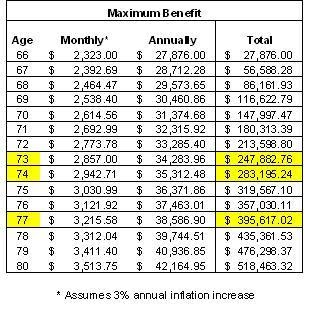
So what is the Small Business solution? What could possibly help small business owners survive in the face of a colossal governmental failure? A payroll tax cut for one. And what is it that justifies a payroll tax cut for small business owners? As I pointed out in Part I, small business owners pay an unfair burden of Social Security and Medicare Taxes, and we receive nothing in return. By nothing, I mean that we will receive the same benefits as regular workers after having paid twice the amount of payroll taxes (see the chart below).

Click To Enlarge

What we are asking for is fair. What we are asking for is economic justice. We want the Federal Government to stop unfairly burdening small businesses with an unjust burden of payroll taxes with no corresponding benefit. All we want back is some of our own hard earned money, produced from our own toil, in order to improve the future economic outlook of our communities and our nation.

If we get our desired tax cut, what will small business owners do? We will have been aided in paying our bills, in reducing our current debt, in not having to lay off additional workers, and in having survived for another day. And we will have done so with our own money, and not through a government handout.

Who will die? When I say, “give me a tax cut, or give me death”, it won’t be me or my fellow entrepreneurs who die. The first casualty will be the next laid off employee, and eventually the Federal Government. Every employee we lay off leads to negative government revenue, and reduced GDP. Most of us can scale back on spending and survive, but one can only cut so much before creditors are jeopardized. The Federal Government is well on the road that leads to death.

We will survive, but will the Federal Government? Small businesses have been cutting back on spending in the face of the economic decline. The Federal Government, on the other hand, has been increasing its debt. If Obama’s incompetent economic theory leads to the bankruptcy of the United States government, then that is just a natural consequence of spending more than annual revenue, year after year. Eventually the principal and interest payments will surpass revenue. But that’s Obama’s plan and not the road for me. As for me,

Give me a tax cut, or give me death!

Tips: 5 Ways To Manage Business Debt

National Debt Crisis – 2010

Obama’s Debt Crisis

How much is the National Debt costing America?

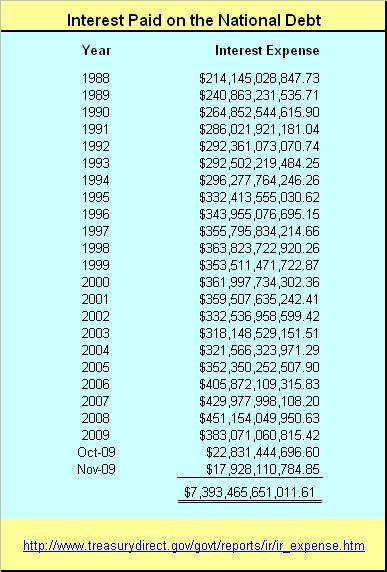
It’s interesting to note that the total interest paid on the National Debt since 1988 has been $7,393 billion (that’s $7.4 trillion). That’s a lot of money being wasted by politicians in Washington, D.C. and there are not enough people talking about it. There is an even more deafening silence regarding what the cost will be over the next 10 years. The United States will pay almost as much interest as it did over the last 20 years in just the next 10. And no one in Washington is addressing the Debt Crisis. I would to God that somebody would wake them up before it’s too late.

click to enlarge

Source: Treasury Direct

Plan A – Pay the Debt Now

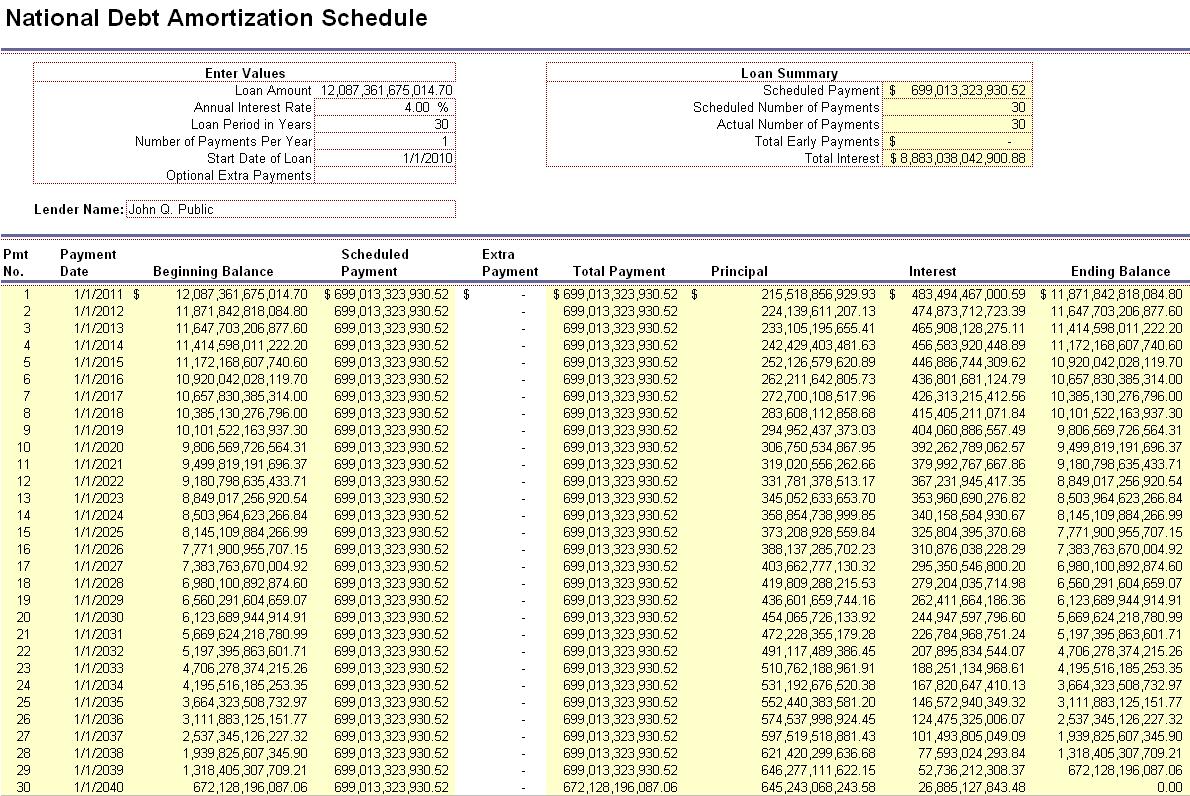
The National Debt is currently $12,087 billion (that’s $12 trillion). If principal and interest payments were made over the next 30 years at 4.0% interest, the total remaining interest cost would be $8,883 billion (that’s $8.9 trillion). The total annual P&I payment would be $699 billion or roughly 31% of current government revenues (click on the chart below). But since it’s not likely that this plan will ever see the light of day, what is Plan B?

PLAN A - click to enlarge

Plan B – Ignore the Debt until 2019

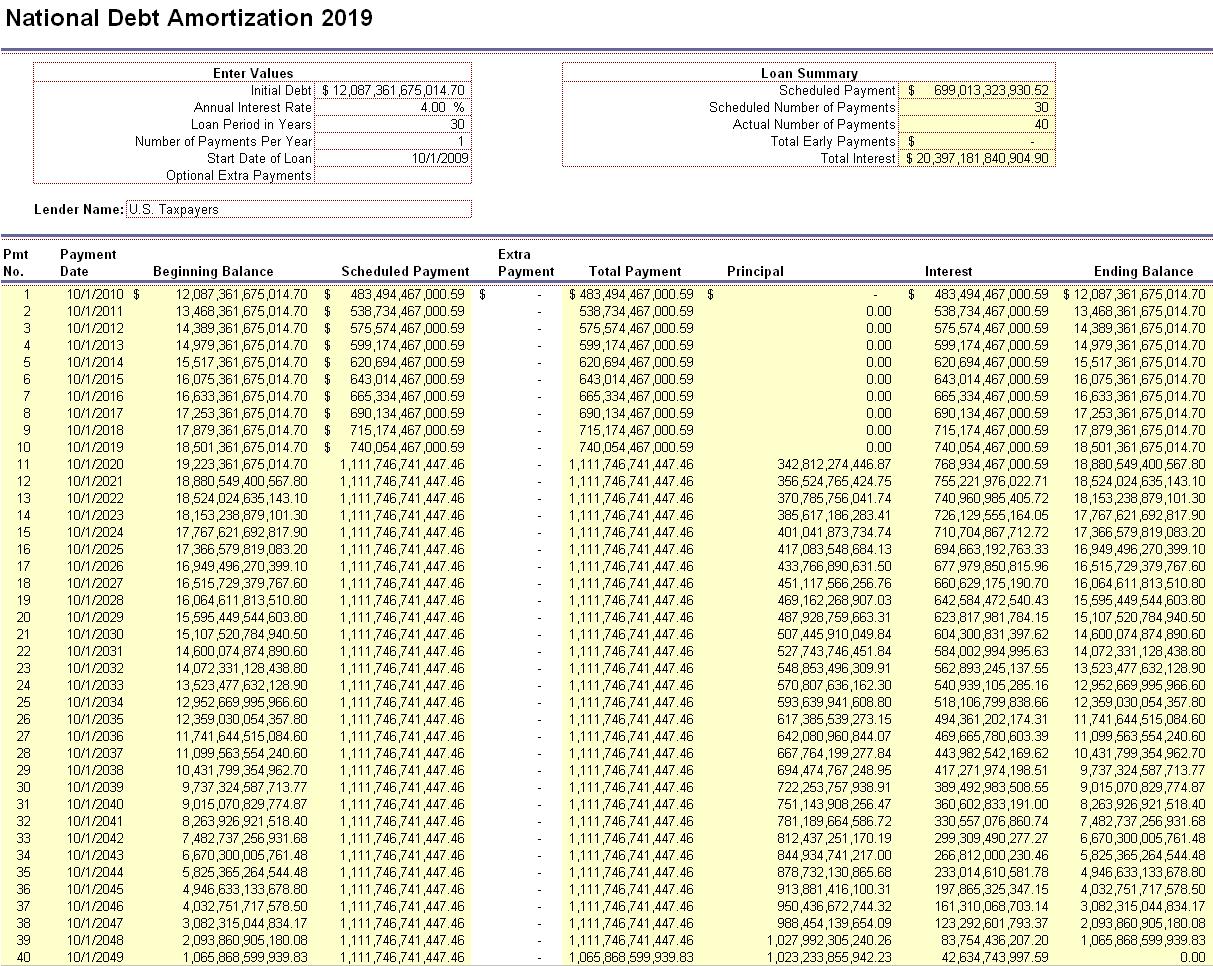
The National Debt is projected to grow to $19,224 billion (that’s $19 trillion) by the year 2019. This is calculated by adding the CBO’s projected budget deficit of $7,137 billion to our current debt. If the debt is not addressed until 2019, the cost of interest over the next 10 years would be $6,271 billion, since no principal payments will have been made (see chart below). Then, assuming that a plan is put in place to pay the debt off over the ensuing 30 year period, ending in fiscal year 2050, the total cost of interest over the next 40 years will be $20,397 billion (that’s $20.4 trillion). If the government starts making payments after 2019, the annual P&I payment would be around $1.1 trillion or 49% of current government revenues.

PLAN B - click to enlarge

Obama’s Debt Crisis

If we address the National Debt now it will cost roughly $8.9 trillion in interest. If we wait until 2019 it will cost closer to $20.4 trillion in interest. If we never address our debt and continue to treat it as an interest only loan, then this number will “skyrocket”. In fact we may already be at the point of no return.

This is Barack Obama’s failure. Obama talks the talk but he doesn’t walk the walk. Obama will cost America $6.3 trillion in interest over the next 10 years by his failure to address the national debt. Add that to his $7.1 trillion (and rising) budget deficit and Obama will have cost America at least $13.4 trillion. So any success that Obama touts short of $13.4 trillion in savings, revenue or benefits is a joke.

The Consequences

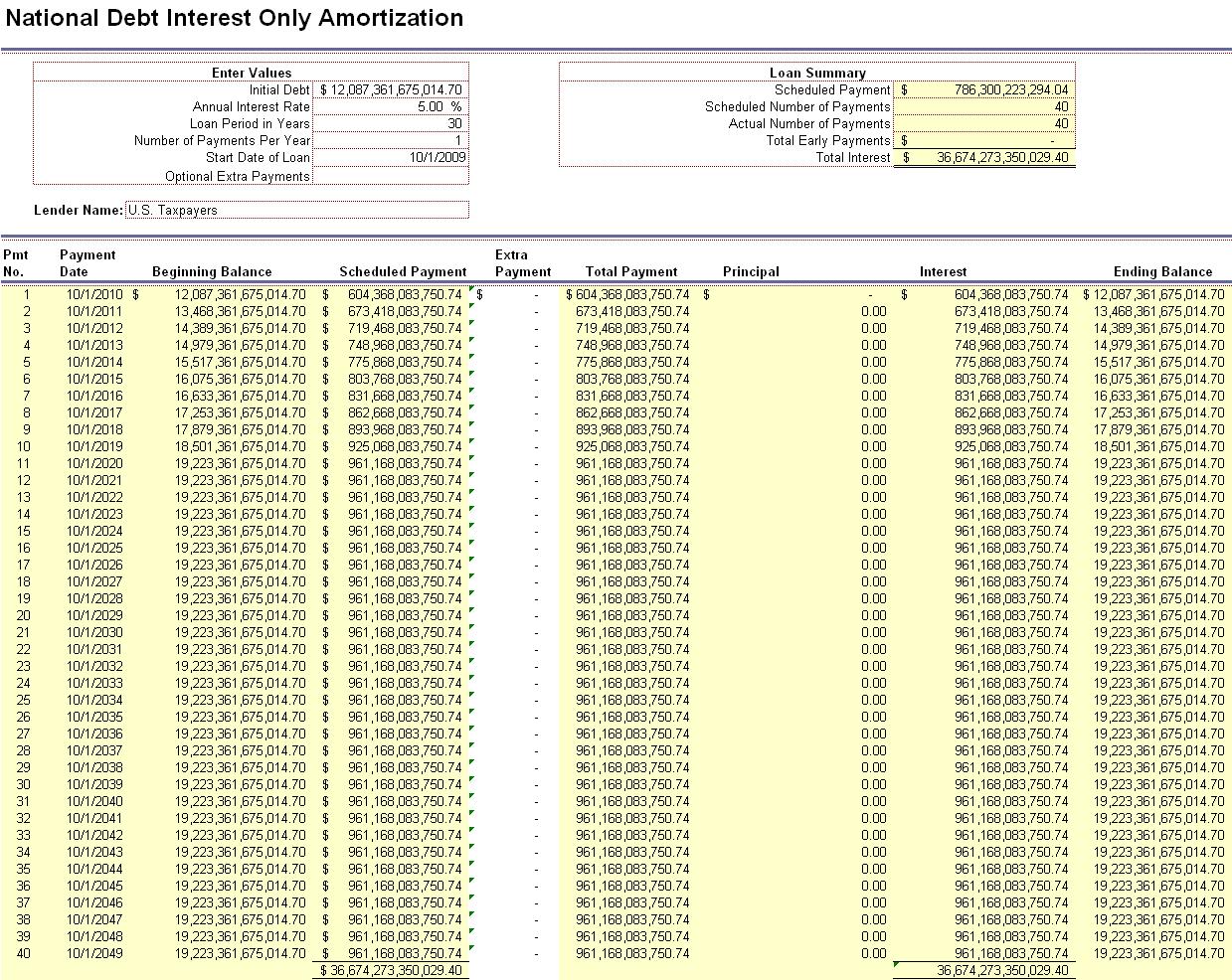
What consequences could American’s face if the debt is not dealt with? Well, for one interest rates are currently at an all time low, and there is only one direction they can go, up. When interest rates begin to rise, so will the cost of the debt. As shown here, if interest rates rise to 5.0% and the debt is not brought down by fiscal year 2050, then the total interest cost jumps from $20.4 trillion to $36.8 trillion. That’s about the equivalent of three times annual GDP wasted on interest payments.

Also, the United States could lose its AAA-credit rating. Once AAA status is gone it will be tougher for the nation to borrow money and lenders will charge higher interest rates. Lenders may also begin to impose stringent standards on our nation’s fiscal policies. Don’t forget that a lot of this borrowed money comes from foreign countries. In other words, if we don’t deal with the debt now it will only cost more in the future and we could potentially lose some of our freedom in the process.

Is Congress Brain Dead?

When Congress talks about saving the country a couple of hundred billion over 30 years, by passing a health care entitlement bill, I can’t help but wonder if anyone is awake at the helm. Congress is on the path of costing the country roughly $6.3 trillion in interest over the next 10 years, plus another $14.1 trillion over following 30 years, and these are probably low-ball figures, and what are they up to? Telling us how they will save a few pennies by adding a few trillion more to the National Debt. Yet, if Congress fails to address the Debt by 2019, the interest costs will soar well beyond the $20 trillion mark.

Those who truly love this country could care less about the Congress saving $200 billion on a new entitlement program. I could especially care less since I know that it will cost 5 times as much to implement and more down the road. Don’t talk to me about Health Care reform while your back is turned on the more pressing $20 trillion problem. Will somebody please wake up the Congress, the Media, and the Borrower in Chief? Wake them up before it’s too late.

Note: This posting is based on the following assumptions: (1) that interest rates are fixed at 4.0%, and (2) that the debt is repaid over a 30 year term.

References/Related:

GAO Financial Audit of Public Debt 2007-2008

CBO Budget Projections through 2019

U.S. Treasury Direct

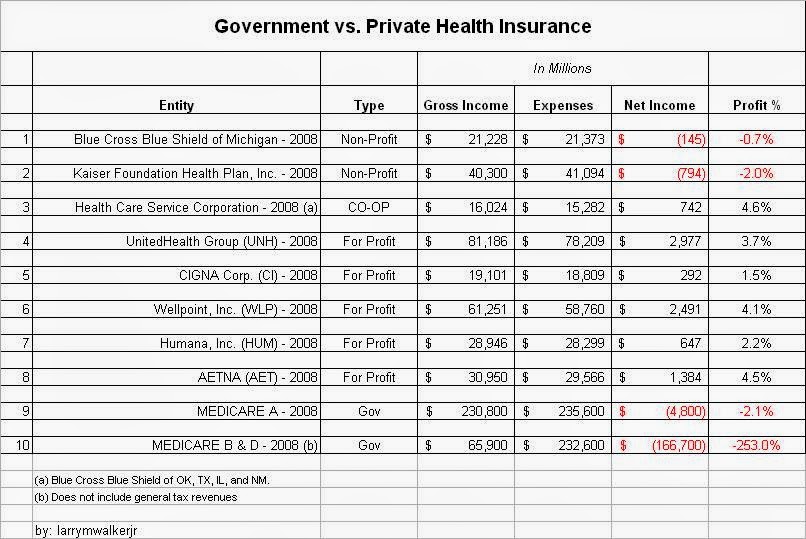
Government-Run vs. Private Health Insurance

The table above was revised on 08/30/09.

click image to enlarge

Government-Run vs. Private Health Insurance

More Honest Debate

First of all, 60% of private sector health insurance providers are non-profits who must by law disclose their records to the public. You can find their tax returns online including information about programs, and compensation.

Most of the remaining companies are publicly traded and by law must file 10K and 10Q reports with the SEC. Their financial information and compensation information is also available online on various websites.

Information on government-run health insurance programs (i.e. The Public Option) may also be found online. The Social Security Administration issues an annual Trust Fund report. (Note: Both public trustee positions are still vacant.)

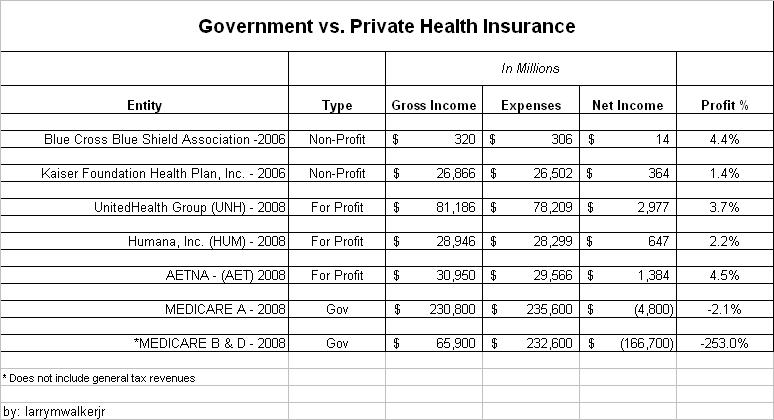
In comparing the three types, it is clear that something is wrong with the federal government. I have to disclose that I did not include the funds that Medicare obtains from general government revenues, above, because this money comes directly from income taxes.

Medicare Part A is funded primarily by payroll taxes assessed on an individual’s total wages. Medicare B and D is funded primarily by premiums charged to Social Security recipients (which I might add is kind of redundant).

To be brief: For-profits are by necessity in the black. On the other hand, government-run insurance is in the tank. In fact, Medicare is projected to exhaust it’s assets by 2017 according to the 2009 Annual Trustees Report.

So I ask this question. Who is better qualified to manage health insurance: ‘government workers’ in Washington, DC or the Private Sector? I think you know the answer.

Solution: With proper regulation and oversight, turn over Medicare, and Social Security to the Private Sector. Bigger government is not the solution, it’s the problem.

[Update: Expanded table and updated sources on 08/30/09]

Sources:

  1. http://www.bcbsm.com/home/bcbsm/annual_report.shtml

  2. http://www.redorbit.com/news/health/1639322/kaiser_foundation_health_plan_inc_and_kaiser_foundation_hospitals_report/

  3. http://www.hcsc.com/about-hcsc/finance.htm

  4. http://www.marketwatch.com/investing/stock/unh/financials

  5. http://www.marketwatch.com/investing/stock/ci/financials

  6. http://www.marketwatch.com/investing/stock/wlp/financials

  7. http://www.marketwatch.com/investing/stock/hum/financials

  8. http://www.marketwatch.com/investing/stock/aet/financials

  9. http://www.ssa.gov/OACT/TRSUM/index.html

  10. http://www.ssa.gov/OACT/TRSUM/index.html

Getting Honest About Social Security – Part 3

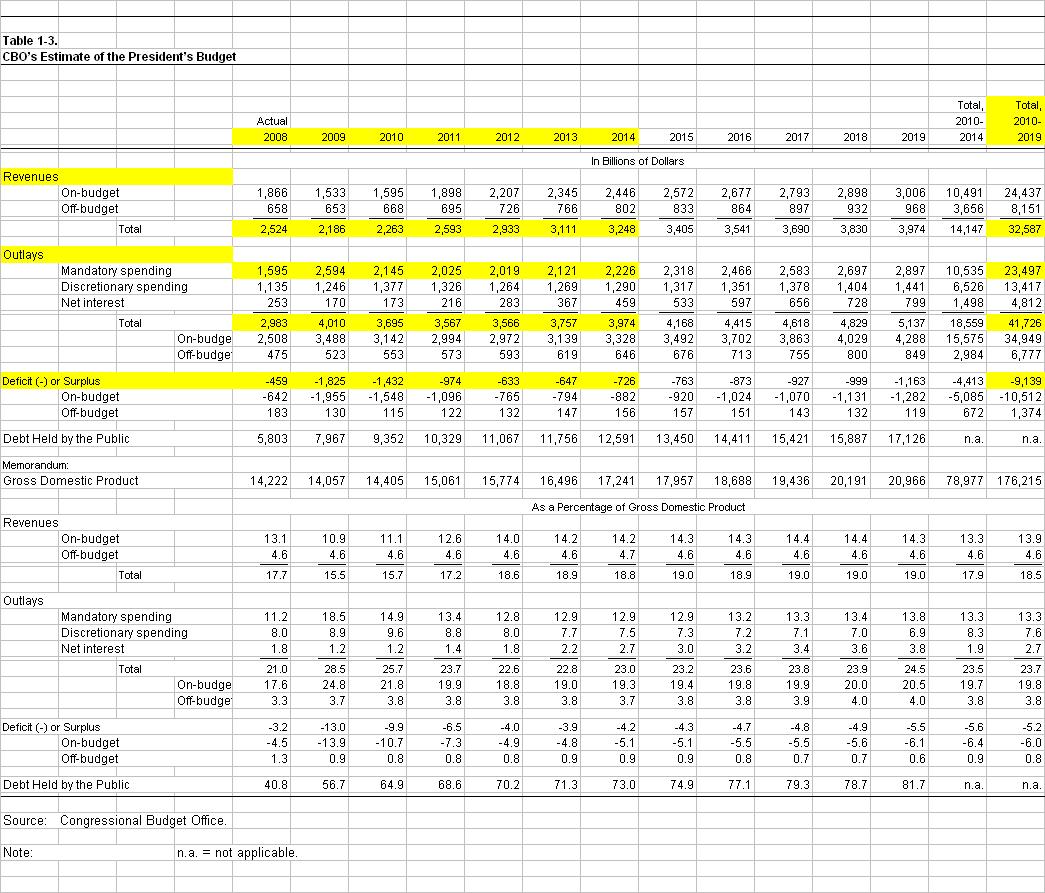
We begin with the Congressional Budget Office’s Estimate of the President’s Budget (above). Why wait until tomorrow? It’s on the CBO’s website at http://cbo.gov/?

You will recall from Part 2, that entitlement spending (aka mandatory spending) is comprised of the following:

Entitlement Spending, at $1.595 trillion in FY 2008, is over half of the U.S. Federal Budget. The largest entitlement spending programs based on FY 2006 were Social Security and Medicare, as follows:
  • Social Security – $544 billion
  • Medicare – $325 billion
  • Medicaid – $186 billion
  • All other mandatory programs – $357 billion. These programs include Food Stamps, Unemployment Compensation, Child Nutrition, Child Tax Credits, Supplemental Security for the blind and disabled, Student Loans, and Retirement / Disability programs for Civil Servants, the Coast Guard and the Military
In FY 2009 and 2010 alone, entitlement spending is projected to exceed government revenue by some $290 billion. So the United States is facing a budget deficit, in just two years, before spending one dime on our defense, education, veterans pensions, and other vital programs. And this wasn’t supposed to happen for another 31 years?

Is anyone still seriously considering dumping another $1 trillion dollars into this government-run ponzi scheme?

Obama said he wanted an ‘honest debate’ on his health care proposal. Well, here’s the problem. We can’t afford to waste another dollar on some misguided government program, no matter how noble. Social Security is little more than a government-run Ponzi Scheme. Medicare is only 1/2 funded by premiums. Isn’t Medicare an example of government-run health care?

What kind of health insurance company would only collect 1/2 of what it spends on claims year-after-year, after year? I’ll tell you. A government-run health insurance company. Like that commercial says Mr. president, “You Need A Plan!”

Solutions abound, but what Obama is proposing isn’t one of them.

To even begin an ‘honest’ discussion on Social Security, Medicare, Government Option Health Care, or any other ‘reform’ proposed by ‘government workers’, you first need to get honest with the public, and then your proposals had better include the following:

  • Reductions in government spending
  • Reductions in government programs
  • Privatization of government entitlement programs
  • Budget balancing initiatives
  • Incentives for private investment
  • Incentives for private business growth
  • Incentives for private job creation
  • and, Policies that promote individual liberty

Getting Honest About Social Security – Part 2

What are Entitlements?

Entitlement Spending, at $1.412 trillion in FY 2006, is over half of the U.S. Federal Budget. The largest entitlement spending programs are Social Security and Medicare, as follows:

  • Social Security – $544 billion

  • Medicare – $325 billion

  • Medicaid – $186 billion

  • All other mandatory programs – $357 billion. These programs include Food Stamps, Unemployment Compensation, Child Nutrition, Child Tax Credits, Supplemental Security for the blind and disabled, Student Loans, and Retirement / Disability programs for Civil Servants, the Coast Guard and the Military

How Is Social Security Funded?

Social Security is funded through payroll taxes. Through 2017, Social Security collects more in tax revenues than it pays out in benefits because there are 3.3 workers for every beneficiary. However, as Baby Boomers start to retire and draw down these benefits, there will be fewer workers to support them. By 2040, the revenues to pay for Social Security will be less than the expenditures.

How Is Medicare Funded?

Unlike Social Security, Medicare payroll taxes and premiums cover only 57% of current benefits. The remaining 43% is financed from general revenues (i.e. including any surplus remaining from Social Security). Because of rising health care costs, general revenues will have to pay for 62% of Medicare costs by 2030.

Medicare has two sections:

  • The Medicare Part A Hospital Insurance program, which collects enough payroll taxes to pay current benefits.

  • Medicare Part B, the Supplementary Medical Insurance program, and Part D, the new drug benefit, which is only covered by premium payments and general tax revenues.

How Will the FY 2008 Budget on Entitlement Spending Affect the U.S. Economy?

Through 2012, entitlement spending is budgeted at about 10.5% of GDP, with payroll tax revenue at about 6.5% of GDP, so that these unfunded obligations add to the general budget deficit. For example, in FY 2006 Social Security brought in $608 billion in “off-budget,” extra funds from payroll taxes. However, other entitlement programs had expenses that far outweighed this “extra” revenue, creating a mini-deficit of $574 billion within the entitlement spending budget alone. The amount increases to $784 billion by 2012.

Long-term Impacts

Long-term, however, the impact of doing nothing about these burgeoning unfunded mandates will be huge. The first Baby-Boomer turns 62 this year, and becomes eligible to retire on Social Security benefits. By 2025, those aged 65+ will comprise 20% of the population.

As Boomers leave the work-force and apply for benefits, three things happen:

  1. The percentage of the labor under 55 stops growing, providing less payroll taxes to fund Social Security.

  2. GDP growth declines to less than 2% due to fewer workers.

  3. By 2040, Social Security alone brings in less than it spends.

Getting Honest

Obama has stated that any further debate on his health care reform proposals needs to be “honest debate”. He implies that critics have been dishonest, which means we’re just lying.

In looking at the facts above, one need only ask the following question:

Are the budgetary problems facing ‘government workers’ in Washington, DC caused by the private sector, or by the government?

Obama wants to overthrow the private health insurance industry and fold it into a government run entitlement. Yet, the federal government has proven itself incapable of managing its current programs. How is adding more of the burden to the government going to resolve the baby boomer issue?

With all due respect, as a wise man once stated, “government is not the solution to our problems, government is the problem.”

What we need to be discussing is a way to turn over the government’s primary entitlements: Social Security and Medicare to the private sector, not the other way around. If not, the next thing ‘government workers’ will be proposing is how they can fold State, and private pension money into the black hole of the Social Security Ponzi Fund.

Obama’s solution: Solve a problem by compounding it. “We have to spend more money to keep from going bankrupt.”

American’s are simply saying, “No”.

Getting Honest About Social Security – Part 1

Reality

The maximum social security benefit for 2009 for a person retiring at full retirement age (66) is $2,323. This is based on earnings at the maximum taxable amount for every year after age 21.

Analysis based on maximum benefits:

  • The total paid into the system by, or on behalf of, the recipient by the age of 66 is $266,377 ($235,042 of this since 1980).
  • The total paid in by the age of 66 with 3% compound annual interest is $394,785.
  • By the age of 74, the recipient will receive a full return of the amount paid in on their behalf without interest.
  • By the age of 77, the recipient will receive a full return of the amount paid in on their behalf with interest compounded at 3% annually.
  • Assuming the funds continue to receive a return of 3% through the annuity phase, the funds would last up to the age of 80.

So by the age of 74 the total paid in by the recipient plus amounts matched by employers are exhausted. If the government were able to achieve a meager 3% rate of return, the total savings at the time of retirement would be exhausted by the age of 77. Assuming a 3% return on investment during the annuity phase, the funds should last through the age of 80.

However, in reality, the average monthly benefit for social security recipients is only $1,061 per month or $12,732 per year in 2009. There are currently some 51.8 million recipients receiving some $55.0 billion in benefits each month.

Dishonesty

The only problem and it is a major problem, in fact it is a problem many times worse than the alleged health care crisis, is the fact that the government has stolen the Social Security Trust Fund. There is no trust fund. There are ‘no’ dollars in savings for the government to invest and receive even a meager 3% return. Every dollar paid into the fund this month will be spent this month, and then some.

Worse than that, the Federal Government has run up a National Debt of $11 trillion, and intends to increase this debt by another $9 trillion over the next 10 years. With the peak of baby boomers hitting retirement age in 2019, a $20 trillion National Debt, longer life expectancy, and a smaller workforce, how are politicians going to be able to keep this “ponzi” scheme going?

Honesty

It is clear to me that Washington, DC cannot be trusted with taxpayer’s money. We need to get the Federal Government the heck out of the retirement business. And don’t even talk to me about letting the government take over health care. I’m not hearing it.

We need to work on solutions that will allow American citizens to save for their own retirement, and to be able to pay for their own health care. At the same time, we have to figure out how to untangle ourselves from this massive ponzi scheme which politicians have gotten us into.

As far as I’m concerned, any solution that involves spending another dollar of taxpayer’s money better include a detailed cost benefit analysis. Any solution to the problems of our time that doesn’t involve drastic cuts in spending by the federal government is not a solution.

To even begin an honest discussion on social security, Medicare, health care or any other political issue being discussed these days, ‘government workers’ had better get honest with the public, and their proposals had better include the following:

  • Reductions in government spending
  • Reductions in government programs
  • Privatization of government entitlement programs
  • Budget balancing initiatives
  • Incentives for private investment
  • Incentives for private business growth
  • Incentives for private job creation
  • Policies that promote individual liberty

References:

http://www.ssa.gov/policy/docs/quickfacts/stat_snapshot/

http://ssa-custhelp.ssa.gov/cgi-bin/ssa.cfg/php/enduser/std_adp.php?p_faqid=5&p_created=955050377

http://www.socialsecurity.gov/OACT/COLA/cbb.html

https://blackandcenter.blog/2009/08/16/the-cbo-and-our-common-welfare/

http://www.cbo.gov/doc.cfm?index=10297

http://www.usnews.com/articles/opinion/mzuckerman/2009/08/10/deficit-means-massive-tax-hike-years-of-misery-if-obama-wont-cut-spending.html