Progressive Regression | Gulf Oil Disaster

Government Regulation vs. Self-Regulation

– By: Larry Walker, Jr. –

The Progressive Obama Administration’s magical solution for all problems American is more government regulation. But is government regulation really better than self-regulation?

Companies like BP have a direct interest in the safe, efficient drilling and harvesting of oil. Would it benefit a private oil company like BP to carelessly blow up its own oil well and lose millions of gallons of the precious black gold into the sea? No. Did it benefit Exxon to crash the Valdez and leak millions of gallons of oil off the coast of Alaska? No. So every company has a direct interest in self-regulation.

Sure, accidents will happen. And when accidents happen, private companies will pay the price under applicable Federal and State laws. Many private sector executives have even found themselves behind bars when laws were violated. But what happens when government regulators screw up?

On May 27, 2010, Elizabeth Birnbaum, the former head of the Minerals Management Service (MMS), which is charged with monitoring and regulating offshore drilling, simply resigned.

On May 17, 2010, Chris Oynes, the associate director of Offshore Energy and Minerals Management at the Minerals Management Service simply announced that he was moving up the date of his retirement to May 31, 2010.

On May 11, 2010, Frank Patton, an unlicensed Minerals Management Service (MMS) engineer, who approved the plans for the Deepwater Horizon’s blowout preventer just four days before the blowout, admitted that he did so without ever seeing the blowout preventer plans. He further admitted that he has never seen any such documents on the more than 100 approvals his office issues each year. MMS regulation 250.416(e) requires would-be drillers to submit proof that the blowout preventer they are using to shut off the well will have enough power to shear a drill pipe in case of an emergency, but Patton was apparently unaware of this particular regulation. As far as we know, Patton will keep his job, and will probably get a promotion.

In September of 2006, Interior Department Inspector General, Earl Devaney told a House panel that the Minerals Management Service failed to include price triggers in leases signed with oil companies in 1998 and 1999. The Government Accountability Office estimated that the total cost to taxpayers during the two year period was over $10 billion, yet government officials once again were able to pass the buck.

The point is that U.S. taxpayers have been paying billions of dollars (that we don’t have) annually, for more and more government regulation, yet when it comes time to hold the government accountable we find that they are not.

Barack Obama, and his Progressive minion’s solution to every problem American is more government regulation. I see this cowardly pat answer as just another way of passing the buck. Should we feel confident when Obama, who’s on his way to going down as the worst president in American history, boldly declares that ‘the buck stops with him’? Obama, like his predecessor’s, will be long gone when it is discovered just how badly he screwed up.

In reality, and in general, all that government regulation does is to increase taxes in many forms (income, excise, fees, fines), which in turn makes products and services more expensive for all American consumers; and it creates a layer of unaccountable bureaucrats, who ultimately make us all less safe, secure and prosperous.

Progressive Obama worshippers say that we need more government regulation. I say we need less. It would benefit all Americans to begin dismantling our huge governmental bureaucracy. Increasing the size and scope of government regulation has not historically benefited a single soul, and it never will.

Less Government regulation leads to lower taxes, lower consumer prices, greater accountability, more freedom, and more wealth creation opportunities. What exactly did we get for all the money spent on regulating oil drilling in the Gulf of Mexico?

Patton’s Folly: Is MMS Indictable for Gulf Disaster?

Frank Patton - the unlicensed MMS engineer who approved Deepwater Horizon Plans on Apr 16, 2010

By: Larry Walker, Jr.

Frank Patton (left), the unlicensed Minerals Management Service (MMS) engineer, who approved the plans for the Deepwater Horizon’s blowout preventer, actually never saw the plans. Yet, Patton issued his approval on April 16, 2010, just four days before the blowout.

During the oil rig explosion hearings held in mid-May, Patton admitted that he has never asked for, nor reviewed, blowout preventer plans on any of more than 100 applications his office approves each year. In fact, Patton stated that he was never instructed that he needed to review such plans.

When asked whether this is standard MMS policy, or just Frank Patton’s policy, Mr. Patton said, “I’m not sure.”

What? You’re not sure?

It’s bad enough that Patton is not a licensed Professional Engineer (PE). (See An Unlicensed MMS Engineer and The Gulf Disaster). But his not knowing why he would need to ask to see the actual blowout preventer plans, before he approves them, is just plain ignorant. Without even looking at the plans, Patton has perhaps approved more than 100 blowout preventers each year. What happened to due diligence? What happened to common sense?

Has the Federal Government gotten so big that one hand doesn’t know what the other is doing? It sure looks that way. Why are Federal employees exempted from being required to hold PE licenses? There’s really no excuse.

It’s time for the Federal government to stop placing all the blame for this disaster on BP, to man-up, and to take responsibility for its own failures. This message is for the House Oversight and Investigations Subcommittee. For God’s sake, open up your eyes, and then start telling the truth for a change.

Following are some excerpts from the oil rig explosion hearings:

Under scrutiny from officials in his own agency, the local Minerals Management Service engineer who approved BP’s application to drill under the Deepwater Horizon admitted that he approved the blowout preventer that failed to stop the Gulf of Mexico oil spill without assurances that its last-ditch mechanism would work on the drill pipe the company was using.

Jason Mathews, an MMS official who sits on the six-member joint Coast Guard and MMS investigative board, questioned Frank Patton, the agency’s New Orleans District drilling engineer, about his approval of BP’s drilling permit. Mathews noted that MMS regulation 250.416(e) requires would-be drillers to submit proof that the blowout preventer they are using to shut off the well will have enough power to shear a drill pipe in case of an emergency.

Those mechanisms on the 450-ton blowout preventer at the bottom of the seabed are called blind shear rams, a pair of high-pressure valves and blades that are supposed to slice through a gushing drill pipe and close off a well leak. But attempts to get those shear rams to operate on the well below the Deepwater Horizon have been unsuccessful since the April 20 disaster.

Patton testified he was not aware of any such requirement and never demands it from more than 100 applications his office reviews each year.

“I have never been told to look for this statement,” Patton said. The BP application had “no information on blind shear rams’ ability to shear the drill pipe used.”

“If they didn’t submit it, why did we approve it?” Mathews asked.

“That is one thing I don’t look for in my approval process,” Patton said. “I’ve never looked for that statement there.”

“Is this just you, or is this MMS-wide? ” Mathews persisted.

“I’m not sure,” Patton said sheepishly.

Source: New Orleans Times-Picayune and An Unlicensed MMS Engineer and The Gulf Disaster

Obama’s Jones-Act Massacre: Updated

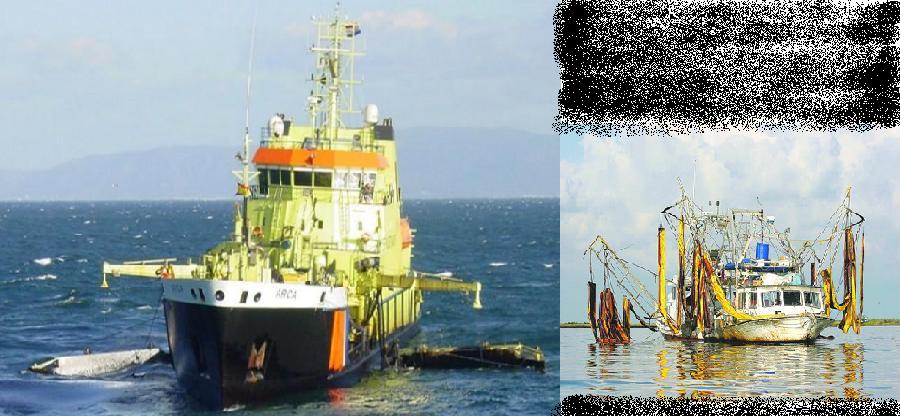
Dutch Koseq Sweeping Arms vs. Obama’s Jones-Act Disaster

Dutch Sweeping Arms vs. Obama's Jones Act Special

Koseq rigid sweeping arm systems – the best oil recovery equipment for offshore. The only tool for recovery of oil on open sea that works even under severe weather and sea conditions.

Updated: The Dutch offered to loan the U.S. four of these systems on day 3 of the Gulf disaster, but Obama said, “thanks but, no thanks.” Now it’s too late. How long did it take to waive the Jones-Act? Fifty some-odd days? How many lives, jobs, and businesses have been ruined unnecessarily? How much marine life could have been saved had Obama acted sooner? All Obama had to do was waive the Jones Act. All he needed to do was put America first.

Now he owns it. This is Obama’s Jones-Act Massacre.

By the way, since we have several thousand active oil wells in the Gulf of Mexico, exactly how many modern day oil skimmers do we have, on standby, in the region?

I think we need a six-month moratorium on Obama’s big mouth, and then some real change in 2010 and again in 2012.