Progressive Regression | Gulf Oil Disaster

Government Regulation vs. Self-Regulation

– By: Larry Walker, Jr. –

The Progressive Obama Administration’s magical solution for all problems American is more government regulation. But is government regulation really better than self-regulation?

Companies like BP have a direct interest in the safe, efficient drilling and harvesting of oil. Would it benefit a private oil company like BP to carelessly blow up its own oil well and lose millions of gallons of the precious black gold into the sea? No. Did it benefit Exxon to crash the Valdez and leak millions of gallons of oil off the coast of Alaska? No. So every company has a direct interest in self-regulation.

Sure, accidents will happen. And when accidents happen, private companies will pay the price under applicable Federal and State laws. Many private sector executives have even found themselves behind bars when laws were violated. But what happens when government regulators screw up?

On May 27, 2010, Elizabeth Birnbaum, the former head of the Minerals Management Service (MMS), which is charged with monitoring and regulating offshore drilling, simply resigned.

On May 17, 2010, Chris Oynes, the associate director of Offshore Energy and Minerals Management at the Minerals Management Service simply announced that he was moving up the date of his retirement to May 31, 2010.

On May 11, 2010, Frank Patton, an unlicensed Minerals Management Service (MMS) engineer, who approved the plans for the Deepwater Horizon’s blowout preventer just four days before the blowout, admitted that he did so without ever seeing the blowout preventer plans. He further admitted that he has never seen any such documents on the more than 100 approvals his office issues each year. MMS regulation 250.416(e) requires would-be drillers to submit proof that the blowout preventer they are using to shut off the well will have enough power to shear a drill pipe in case of an emergency, but Patton was apparently unaware of this particular regulation. As far as we know, Patton will keep his job, and will probably get a promotion.

In September of 2006, Interior Department Inspector General, Earl Devaney told a House panel that the Minerals Management Service failed to include price triggers in leases signed with oil companies in 1998 and 1999. The Government Accountability Office estimated that the total cost to taxpayers during the two year period was over $10 billion, yet government officials once again were able to pass the buck.

The point is that U.S. taxpayers have been paying billions of dollars (that we don’t have) annually, for more and more government regulation, yet when it comes time to hold the government accountable we find that they are not.

Barack Obama, and his Progressive minion’s solution to every problem American is more government regulation. I see this cowardly pat answer as just another way of passing the buck. Should we feel confident when Obama, who’s on his way to going down as the worst president in American history, boldly declares that ‘the buck stops with him’? Obama, like his predecessor’s, will be long gone when it is discovered just how badly he screwed up.

In reality, and in general, all that government regulation does is to increase taxes in many forms (income, excise, fees, fines), which in turn makes products and services more expensive for all American consumers; and it creates a layer of unaccountable bureaucrats, who ultimately make us all less safe, secure and prosperous.

Progressive Obama worshippers say that we need more government regulation. I say we need less. It would benefit all Americans to begin dismantling our huge governmental bureaucracy. Increasing the size and scope of government regulation has not historically benefited a single soul, and it never will.

Less Government regulation leads to lower taxes, lower consumer prices, greater accountability, more freedom, and more wealth creation opportunities. What exactly did we get for all the money spent on regulating oil drilling in the Gulf of Mexico?
Obama’s Jones-Act Massacre: Updated

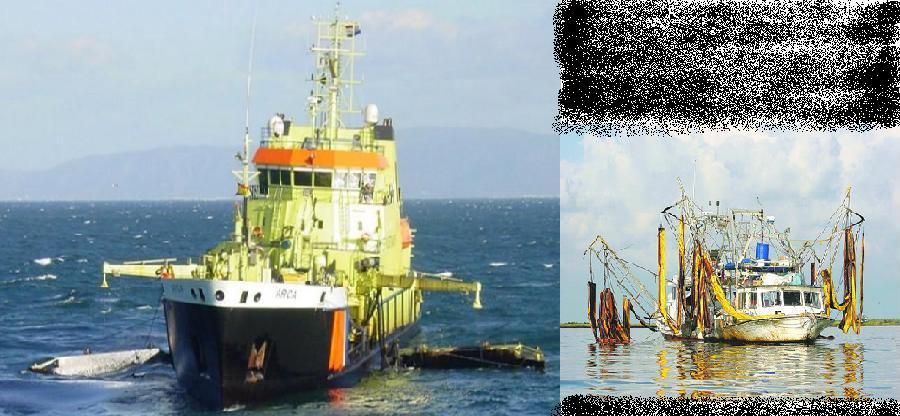
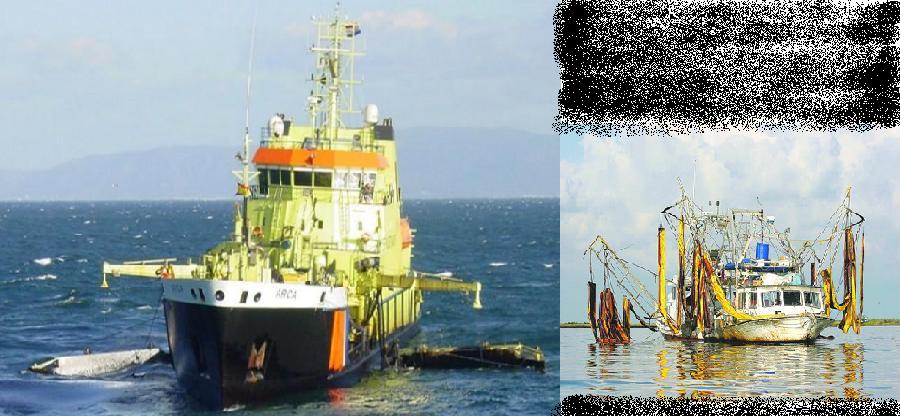
Dutch Koseq Sweeping Arms vs. Obama’s Jones-Act Disaster

Dutch Sweeping Arms vs. Obama's Jones Act Special

Koseq rigid sweeping arm systems – the best oil recovery equipment for offshore. The only tool for recovery of oil on open sea that works even under severe weather and sea conditions.

Updated: The Dutch offered to loan the U.S. four of these systems on day 3 of the Gulf disaster, but Obama said, “thanks but, no thanks.” Now it’s too late. How long did it take to waive the Jones-Act? Fifty some-odd days? How many lives, jobs, and businesses have been ruined unnecessarily? How much marine life could have been saved had Obama acted sooner? All Obama had to do was waive the Jones Act. All he needed to do was put America first.

Now he owns it. This is Obama’s Jones-Act Massacre.

By the way, since we have several thousand active oil wells in the Gulf of Mexico, exactly how many modern day oil skimmers do we have, on standby, in the region?

I think we need a six-month moratorium on Obama’s big mouth, and then some real change in 2010 and again in 2012.

An Unlicensed MMS Engineer and The Gulf Disaster

We Don't Need No Stinking License

By: Larry Walker, Jr.

Frank Patton is the name of the unlicensed Minerals Management Service (MMS) Engineer who approved the Deepwater Horizon Disaster. No, that’s not his picture to the left. That’s another matter for another day.

Funny, but I can’t find Tony Hayward’s name on any of those, smoking gun, internal emails being touted around by the House Oversight and Investigations Subcommittee, but I do see Frank Patton’s name. Yep, on April 16, 2010 – ‘Approved By’ – Frank Patton.

From the trial (or hearing) the other day, you would think it was Congress’ job to oversee and investigate private businesses. I somehow don’t think that was part of the original plan. What I would like to see is a subcommittee investigating why federal workers are not required to maintain credentials equal to, or greater than, those whom they regulate.

Who’s regulating the regulators? Unlicensed engineers are approving plans submitted by licensed engineers. When are we going to have a trial about stuff that really matters?

According to licensed Professional Engineer (PE), and whistleblower, Joe Carlson, the Minerals Management Service (MMS), just as other federal agencies, does not require their Engineers to be professionally licensed. Instead, federal agencies have invoked a special ‘exemption’ whereby unlicensed federal workers are above reproach. In other words, “We don’t need no stinking license.” You’ve got to be kidding me!

As one who holds two professional licenses (not in engineering), each with its own rigorous set of ongoing requirements, I have nothing but contempt for the federal government, the Congress, and our feckless POTUS, in this matter. There are no excuses. How is an unlicensed ‘engineer’ supposed to have the ability, training, and the professional integrity to review and approve plans designed by professionally licensed engineers?

What’s worse is the fact that Frank Patton can’t be blamed, fired, reprimanded or fined. Why not, you say? Because, remember, Frank Patton is not even licensed. But Congress can go around blaming Tony Hayward, who is also not licensed, and whose name is curiously not found on any of those damning internal emails. I do however see the names: Brian Morel, Mark Hafle, and Richard Miller. Perhaps they are licensed and should be brought up on charges by the appropriate engineering licensing board. And as for Frank Patton, I just wonder how many safety awards are hanging in his office?

Following are a few excerpts from Joe Carlson:

Frank Patton is the unlicensed MMS engineer who approved the BP drilling plan. During his May 11, 2010 testimony (see pages 252-314) to the Deepwater Horizon Joint Investigation, he admitted, (see pages 274-76), that he failed to ensure the BP Drilling Plan complied with federal regulation at 30 C.F.R. §250.416(e), because it did not contain the required information about the design and performance adequacy of the blow-out preventer. The New Orleans Times-Picayune, which live-blogged the hearing, described his testimony here.

If MMS required its engineers to be PE’s, then Mr. Patton would have been required to “blow whistles,” publicly if necessary, to prevent BP’s inadequate drilling plan from being approved. This could well have resulted in his being fired or otherwise discriminated against at MMS, given widespread, longstanding, MMS corruption. However, had MMS required Mr. Patton to be a PE, then anyone could now file a professional misconduct complaint against him with the Louisiana Professional Engineering Licensing Board, for his professional negligence/incompetence in approving a plan that failed to comply with federal regulation. If he lost his PE license as a result, then MMS could fire him. If he had been a PE, Frank Patton would have made sure the BP drilling plan contained the required information about its blowout preventer and perhaps this unprecedented disaster is averted….

The federal government has a duty to protect American health and safety, at work and elsewhere, including our environment. PE’s, by law, must “hold paramount the health, safety and welfare of the public in the performance of professional duty.” That federal agencies exempt their engineers from having the legal obligations of PE’s is nonsensical and a contributing cause to the Gulf disaster and many other accidents and disasters, such as the recent Upper Big Branch mine disaster which killed 29 in West Virginia.

Here is a formula we can all live with:

Federal PE licensure + reformed federal whistleblower protection = much improved workplace and public health and safety in America.

Read More at the Source: Whistleblowers Protection Blog

Keeping Up with the Jones Act | Deroy Murdock

National Review Online contributing editor Deroy Murdock is a nationally syndicated columnist with the Scripps Howard News Service. His column, “This Opinion Just In…,” frequently appears in the New York Post, Washington Times, and Orange County Register, among some 400 U.S. newspapers he reaches weekly.

This is a great article and I thought it to be worthy of referencing in full. Please read it and pass it on to your friends. It seems to me that Obama messed up, badly, and now it’s too late for him to admit that by waiving the Jones Act, so now all the White House can do is keep their fingers crossed, and cover their asses. Well, that’s just unacceptable. Heads are gonna roll, and by that, I mean heads in Washington, DC, not at BP.

Keeping Up with the Jones Act

An old, protectionist chestnut is devastating the Gulf Coast.

As a self-proclaimed “citizen of the world,” Pres. Barack Obama should have welcomed rather than spurned international assistance to prevent BP’s underwater oil geyser from wrecking the Gulf Coast. But spurn he did. Obama’s failure to waive the Jones Act still maintains a sea wall that blocks potentially helpful foreign ships from this tear-inducing mess.

The 1920 Jones Act requires that vessels operating in American waters be built, owned, and manned by Americans. Some U.S. ship owners love this protectionist measure. So do maritime labor unions. When it comes to confronting unions, Obama rarely crosses that line.

On April 20, the Deepwater Horizon exploded, killed eleven oil-rig workers, and began gushing perhaps 60,000 barrels of petroleum into the Gulf of Mexico daily. Three days later, the Dutch offered to sail to the rescue on ships bedecked with oil-skimming booms. They also had a plan for erecting protective sand barricades.

“The embassy got a nice letter from the administration that said, ‘Thanks, but no thanks,’” Dutch consul general Geert Visser told the Houston Chronicle’s Loren Steffy. “What’s wrong with accepting outside help?” Visser wondered. “If there’s a country that’s experienced with building dikes and managing water, it’s the Netherlands.”

Had those Dutch ships departed for the Gulf nearly two months ago, who knows how much oil they already would have absorbed and how many pelicans now would soar rather than soak in soapy water while wildlife experts clean their wings.

After initially refusing to name them, the State Department on May 5 declared that Canada, Croatia, France, Germany, Holland, Ireland, Mexico, Norway, Romania, South Korea, Spain, Sweden, the U.K., and the U.N. had offered skimmer boats and other assets and experts to prevent the oil from destroying dolphins, crabs, oysters, and this disaster’s other defenseless victims.

Alas, they were turned away.

“While there is no need right now that the U.S. cannot meet,” stated a State Department statement, “the U.S. Coast Guard is assessing these offers of assistance to see if there will be something which we will need in the near future.” Foreign Policy’s Josh Rogin translated this into plain English: “The current message to foreign governments is: Thanks but no thanks, we’ve got it covered.”

Had Obama instead waived the Jones Act via executive order — as did Pres. George W. Bush three days after Hurricane Katrina — that S.O.S. would have summoned a global armada of mercy. Who knows how many fishing, shrimping, and seafood-processing jobs this would have saved? Instead, thousands of Gulf Coast workers will endure a long march from dormant docks to bustling unemployment lines.

Even now, Obama could invite the world to send boats to clean the waters off Louisiana, Mississippi, Alabama, Florida, and (potentially) the Carolinas and points north, if this mass of oil (so far, roughly equal to 13 Exxon Valdez oil spills) seeps into the Loop Current, swerves around Key West, slips into the Gulf Stream, and slides up the Eastern Seaboard.“

If there is the need for any type of waiver, that would obviously be granted,” White House spokesman Robert Gibbs promised on June 10. “But, we’ve not had that problem thus far in the Gulf.

”Problem? What problem?

The Jones Act sometimes gets waived. As Fox News Channel’s Brian Wilson reported on June 11: “According to a news article in Tradewinds Magazine, a US Customs official ruled recently that the Jones Act does not apply to foreign owned vessels installing wind turbines off the coast of Delaware.”

Meanwhile, as Obama respected this old, protectionist chestnut and its Big Labor beneficiaries, he had lots on his mind. As a GOP Internet ad devastatingly details, between Day One and Day 58 of this catastrophe, Obama met with Bono, rocked out with Sir Paul McCartney, and played six rounds of golf, among many other diversions. Yet Obama did not speak directly with BP CEO Tony Hayward until June 16.

Watching Obama’s Tuesday night Oval Office address, BP brass must have been startled to hear the president say: “I will meet with the chairman of BP and inform him that he is to set aside whatever resources are required to compensate the workers and business owners who have been harmed as a result of his company’s recklessness.”

Should BP pay, and pay big? Yes.

Reckless? BP sure seems so.

But since when does the American president “inform” executives that they must devote billions to any cause, no matter how worthy? Isn’t this why Congress passes legislation and courts administer justice?

So, while a pro-labor trade barrier traps potentially helpful boats in overseas ports, due process withers under presidential diktat.

And the crude oil keeps on flowing.

Source: Deroy Murdock, National Review, June 18, 2010 12:00 A.M.

Illegal Dutch Oil Skimmers, the EPA and the Feckless POTUS

Dutch Skimmer with Koseq Rigid Sweeping Arms vs. Obama's Jones Act Special

Compiled by: Larry Walker, Jr.

Two Dutch companies were on stand-by, on May 4, 2010, to help Americans tackle the oil slick in the Gulf of Mexico. The two companies use huge booms to sweep and suck the oil from the surface of the sea. The U.S. Environmental Protection Agency (EPA), however, has difficulties with the method they use.

So it seems that according to the EPA, it’s acceptable to burn millions of gallons of raw crude, sending the harmful waste into the atmosphere, or to dump millions of gallons of toxic dispersant’s into the waters, but it’s not acceptable to actually collect 75-80% of the oil for recycling?

So has Obama stepped in to waive the Jones Act yet? Not quite, but he did sleep at a Holiday Inn Express on the Gulf Coast. Then, like any good community organizer, he excogitated the extortion of $20 billion from BP.

What do the Dutch have that the Americans don’t when it comes to tackling oil spills at sea?

“Skimmers,” answers Wierd Koops, chairman of the Dutch organization for combating oil spills, Spill Response Group Holland.

The Americans don’t have spill response vessels with skimmers because their environment regulations do not allow it. With the Dutch method seawater is sucked up with the oil by the skimmer. The oil is stored in the tanker and the superfluous water is pumped overboard. But the water does contain some oil residue, and that is too much according to US environment regulations.

US regulations contradictory

Wierd Koops thinks the US approach is nonsense, because otherwise you would have to store the surplus seawater in the tanks as well.

“We say no, you have to get as much oil as possible into the storage tanks and as little water as possible. So we pump the water, which contains drops of oil, back overboard.”

US regulations are contradictory, Mr Koops stresses. Pumping water back into the sea with oil residue is not allowed. But you are allowed to combat the spill with chemicals so that the oil dissolves in the seawater. In both cases, the dissolved oil is naturally broken down quite quickly. It is possible the Americans will opt for the Dutch method as the damage the oil spill could cause to the mud flats and salt marshes along the coast is much worse, warns Wetland expert Hans Revier.

“You have to make sure you clear up the oil at sea. As soon as the oil reaches the mud flats and salt marshes, it is too late. The only thing you can do then is dig it up. But then the solution is worse than the problem.”

Senator convinced

On May 4, 2010, a team of around eight men were on stand-by and four skimmers and extra material were ready to be loaded. The local senator is already convinced and is trying to talk the admiral who is coordinating the operation into accepting help from the Netherlands. The answer may be given today (May 4, 2010).

But nothing is certain. In 1989, a Dutch team and equipment had already been flown in to tackle the Exxon Valdez oil tanker disaster off the coast of Alaska. But in the end the US authorities sent them home.

Source: Radio Netherlands

On day 58, I am just wondering exactly which environment the EPA is trying to protect?

Obama’s Conniption

Click to Enlarge

Time for Obama to Go

by: Larry Walker

Why are so many people trying to tell Barack Obama what to do? And why does he keep adapting his leadership stance toward what talking heads are saying? Well, If you’ll step back for a minute and observe, you will see that the answer is simple. Obama doesn’t know what to do. He doesn’t know how to speak to people. He doesn’t know how to be a leader. He doesn’t know how to handle a crisis. And no matter how hard you try to prod this loser onto the right path, he will never get it. It’s too late. School is over. Time to go.

The fact that the nation is polarized, confused and consumed with anger should tell you that something isn’t right. A leader sets the tone in any organization. Obama has set a tone of confusion, deceit, misrepresentation, incrimination, talking at, shouting, and now cursing. So the tone of the nation has followed suit. It’s coming right back at you.

The problem is that Obama is not a leader and should never have been elected to one of the most important leadership posts in the world. He’s weak and unqualified. He’s just plain incompetent. I’m not saying that he’s a bad guy or anything. I mean, I wouldn’t hang out with him or any or his friends, but my point is that he’s not a leader.

What has Obama ever accomplished in his life? He sucked as a community organizer, a State senator, and as a US Senator. The only thing that he ever accomplished in his life, before being pushed into a presidential campaign, was that he wrote an autobiography. That’s it! He wrote a book, or at least put his name on one. And it was a book of half-truths regarding his search for an identity. It is apparent today, that he still has a way to go on that search.

For the good of the country, Obama’s reign of confusion needs to be shattered; trampled, by any means necessary, and sooner rather than later. Subjugate him. Bankrupt him. Impeach him. Whatever it takes to get our nation back on the right track. Else, the path that we’re on, as influenced by Obama, will lead to disaster upon disaster.

I’m sorry to say it, but that’s what happens to weak, unqualified impostors. They get undermined, double-crossed, compacted, squelched, spoiled, impeached or otherwise stripped-down. That’s what will happen to Obama. Obama doesn’t belong in that office. He has disgraced the office of the President of the United States. He has disgraced the United States of America. He has disgraced Black Americans.

It’s his choice. He can either resign, or be resigned, but Obama must go.

Go back to Kenya….Go back to Indonesia….Go to Sheol.

….My Passion.

The Secret, 700-Million-Gallon Oil Fix That Worked — and Might Save the Gulf

Workers on the Arabian Gulf overlook a supertanker owned by Saudi Aramco, the oil company that used a suck-and-salvage American technology to recover 85 percent of its previously unreported spill in 1993 and ’94.

There’s a potential solution to the Gulf oil spill that neither BP, nor the federal government, nor anyone — save a couple intuitive engineers — seems willing to try. As The Politics Blog reported on Tuesday in an interview with former Shell Oil president John Hofmeister, the untapped solution involves using empty supertankers to suck the spill off the surface, treat and discharge the contaminated water, and either salvage or destroy the slick.

Hofmeister had been briefed on the strategy by a Houston-based environmental disaster expert named Nick Pozzi, who has used the same solution on several large spills during almost two decades of experience in the Middle East — who says that it could be deployed easily and should be, immediately, to protect the Gulf Coast. That it hasn’t even been considered yet is, Pozzi thinks, owing to cost considerations, or because there’s no clear chain of authority by which to get valuable ideas in the right hands. But with BP’s latest four-pronged plan remaining unproven, and estimates of company liability already reaching the tens of billions of dollars (and counting), supertankers start to look like a bargain.

The suck-and-salvage technique was developed in desperation across the Arabian Gulf following a spill of mammoth proportions — 700 million gallons — that has until now gone unreported, as Saudi Arabia is a closed society, and its oil company, Saudi Aramco, remains owned by the House of Saud. But in 1993 and into ’94, with four leaking tankers and two gushing wells, the royal family had an environmental disaster nearly sixty-five times the size of Exxon Valdez on its hands, and it desperately needed a solution.

Pozzi, an American engineer then in charge of Saudi Aramco’s east-west pipeline in the technical support and maintenance services division, was part of a team given cart blanche to control the blowout. Pozzi had dealt with numerous spills over the years without using chemicals, and had tried dumping flour into the oil, then scooping the resulting tar balls from the surface. “You ever cooked with flour? Absorbent, right?” Pozzi says. Next, he’d dumped straw into the spills; also highly absorbent, but then you’ve got a lot of straw to clean up. This spill was going to require a much larger, more sustained solution. And fast.

That’s when Pozzi and his team came up with the idea of having empty ships park near the Saudi spill and pull the oil off the water. This part of the operation went on for six months, with the mop-up operations lasting for several years more. Pozzi says that 85 percent of the spilled oil was recovered, and it is precisely this strategy that he wants to see deployed in the Gulf of Mexico.

Yesterday, I spoke to Pozzi and his business partner, longtime Houston lawyer Jon King, about their proposed solution, and the difficulties they’ve encountered trying to assist in the disaster, with both BP and the government. While BP is attempting its very difficult maneuvers to contain the gusher at the source, they say, nothing is being done to adequately address the slick itself. Dispersant is being used by the ton, some of the oil is being burned, and there have been other efforts, which taken together, Pozzi likens to “a flea on an elephant’s ass.” The two men have been trying to rally support since just after the rig blew up, without much success. This has been typical of their experience:

“Daddy, did you remember to send out the supertankers?”

Read more: http://www.esquire.com/blogs/politics/gulf-oil-spill-supertankers-051310?click=main_sr

Solving the Gulf Blowout and Preventing the Next Crisis

Leaders vs. Casual Observers

Relief Wells and Reality: An Ounce of Prevention

Compiled by: Larry M. Walker, Jr.

There’s more to ‘Going Green’ than what naïve Progressive, so called working family party, criminals would have you to believe. In reality, going green should consider an ‘all of the above’ approach. An ‘all of the above’ approach entails using our current natural resources more effectively, efficiently, responsibly and safely. The Progressive Obama Administration has failed in that it has not governed in the present. The Progressive Obama Administration has attempted to govern in the future (i.e. 20 to 40 years out), while neglecting to govern today. One of my favorite quotes is, “Keep it in the day”. Progressives believe that we can somehow skip over today and jump ahead with policies designed for 20 to 40 years from now.

What a ‘real’ government would do is regulate proactively in the present. Perhaps we need another Presidential Commission to do the job, I mean since we have an inexperienced executive in the White House? Beyond the current budget disaster, we need a government who is actively engaged in implementing better safety measures in the areas of mine safety, onshore and offshore drilling, nuclear energy, and hydroelectric energy. Caulking and insulating houses, inflating tires, building solar power plants, and putting up windmills are not the responsibility of the Federal government. The Federal government’s job is to protect us and our freedoms. Do you feel safe?

We don’t necessarily need more laws and regulations, what we need is a government that can enforce our current laws and regulations, something that the Progressive Obama Administration obviously lacks.

Today, I am sifting through excerpts from industry experts regarding the capping of the Deep Water Horizon’s – Macondo well from a historical perspective, alternative capping methods, and finally, how to prevent such disasters from occurring in the future.

Capping With Relief Wells

Capping with relief wells may not be as simple nor timely as implied.

“You have to hit something the size of a dinner plate miles into the earth,” said Richard Charter, a senior policy adviser at the nonprofit Defenders of Wildlife, who follows spills around the world. “Even in a shallow-water blowout, the drilling of a relief well can be complicated and problematic.”

The world’s worst offshore well blowout and oil spill, the IXTOC I well in Mexico’s Bay of Campeche was ultimately stopped with a relief well, after a containment dome, junk shot and top kill failed, but it took nearly 10 months.

05/30/2010 – “There could be oil coming up until August, when the relief wells are dug, ” White House energy and climate change adviser Carol Browner said on NBC’s “Meet the Press” Sunday morning. “We are prepared for the worst. … We will continue to assume that we move into the worst-case scenario.”

I don’t think Ms. Browner has a clue about the worst-case scenario. The worst case scenario is that the relief wells are not completed for another 8 or 9 month’s.

PEMEX: IXTOC I

Fact: When IXTOC I blew in 1979, it was also believed that a relief well could be drilled within three months, however, it took ten months. In fact, it took BP several weeks longer than expected to drill the original Macondo well due to complications. Might the same complications occur in drilling a relief well, or two?

08/06/1979 – Tyler Priest, a historian at University of Houston who has written a book about the history of offshore drilling, said Pemex thought it would go a lot faster. He cited a headline in the Aug. 6, 1979, issue of Oil & Gas Journal that reads, “Pemex: Ixtoc may flow until Oct. 3.”

“They initially estimated three months. It took them almost 10, ” Priest said.

According to a 1981 report from the Society of Petroleum Engineers detailing how Pemex, the Mexican state oil company, stopped the well, engineers decided to start drilling two relief wells at the end of June.

Progress was slow. It took one well until Nov. 20 to reach the original well, and the second took until Feb. 5, 1980.

Shutting down the main well took multiple attempts in February and March 1980 as Pemex shot drilling mud through both wells and gradually decreased the flow of oil.

PTT Exploration: Montara Well

Drilling a relief well could just as well cause a second explosion. At least that’s what happened last year with the Montara well off the coast of Australia. Thus, there is no guarantee that BP’s ‘Plan Z’ will work.

Last August, the Thai company PTT Exploration and Production Co. was drilling the Montara well in 260 feet of water in the Timor Sea off of Australia when it well blew up and began leaking oil into the ocean.

It took 10 weeks and five tries for the drilling rig brought in to drill the relief well to hit its target about 8,600 feet below the sea floor. On the last try, there was another rig explosion, which burned for two days.

The oil was finally stopped on Nov. 3, and it took until mid-January to cap the well, according to news reports.

A final report from the Australian government on the Montara incident is due June 18.

Capping with Nukes

Now this is one way to get the job done. This is how a nuke can be used to plug a well? Following is a detailed video of how the USSR used a nuclear bomb to plug a gas well that was burning and leaking out of control. It may finally come to this sometime in September, as BP would still need to drill to just above the depth of the original well in order to insert a bomb. Although the Russian well was on dry land, the principle is the same, “plug the hole”. The Federal Government may want to look into this option.

An Ounce of Prevention

Once the Macondo well has been capped, and the Gulf Coast has been restored, the question will be: How can we minimize the fallout from offshore drilling blowouts in the future?

How about requiring that oil and gas exploration companies, like BP, drill a minimum of two relief wells in the same season as the primary well? That way, relief wells are already in place ready to cap or blow the main well in the even of disaster. Even Canada is now considering such a measure. So will the U.S. now take the lead or stumble?

“… shortly before the U.S. disaster, BP and other oil companies urged Canadian regulators to drop a requirement stipulating that companies operating in the Arctic had to drill relief wells in the same season as the primary well.”

Why wait until there is another disaster to begin drilling relief wells? An ounce of prevention is worth a pound of cure.

References:

http://www.nola.com/news/gulf-oil-spill/index.ssf/2010/05/challenges_involved_in_drillin.html

http://www.reuters.com/article/idUSN1326556220100513?type=marketsNews

Slick Barack’s Oil Spill | White Lies | IXTOC I

History Lesson: Sedco 135F – IXTOC I

Compiled by: Larry Walker, Jr.

So if the Gulf Oil Blowout is going to take 3 to 10 month’s to cap, then why lie? I’m tired of the lies. If it took Red Adair nearly 10 month’s to cap IXTOC I, why would Obama think his disaster could be resolved in a few weeks? The only way that’s going to happen is through the use of military ordinance to blow the well, creating an underwater seismic event. Any thing short of this is wishful thinking.

In the IXTOC I accident the U.S. had two months to prepare the coast with booms and still failed to prevent a disaster. The Obama administration has wasted a month already. The IXTOC I dumped 3.5 million barrels into the Gulf making it the worst oil disaster ever, until now. Obama could blow the well, but he won’t. Obama could do more for the Gulf States, but he won’t. All Obama knows how to do is run his mouth (with a teleprompter), tell white lies, and make us think everything is F.I.N.E. Those who fail to learn from history are destined to repeat it. Deja Vu…

_____________________________________________________

Summary

In 1979, the Sedco 135F was drilling the IXTOC I well for PEMEX, the state-owned Mexican petroleum company when the well suffered a blowout. The well had been drilled to 3657m with the 9-5/8″ casing set at 3627m. Reports then state that mud circulation was lost (mud is, in essence, a densely weighted drilling fluid used to lubricate the drill bit, clean the drilled rock from the hole and provide a column of hydrostatic pressure to prevent influxes) so the decision was made to pull the drill string and plug the well. Without the hydrostatic pressure of the mud column, oil and gas were able to flow unrestricted to the surface, which is what happened as the crew were working on the lower part of the drillstring. The BOP was closed on the pipe but could not cut the thicker drill collars, allowing oil and gas to flow to surface where it ignited and engulfed the Sedco 135F in flames. The rig collapsed and sank onto the wellhead area on the seabed, littering the seabed with large debris such as the rig’s derrick and 3000m of pipe.

The well was initially flowing at a rate of 30,000 barrels per day (1 barrel = 42 US gallons = 159 litres), which was reduced to around 10,000 bpd by attempts to plug the well. Two relief wells were drilled to relieve pressure and the well was eventually killed nine months later on 23 March 1980. Due to the massive contamination caused by the spill from the blowout (by 12 June, the oil slick measured 180km by 80km), nearly 500 aerial missions were flown, spraying dispersants over the water. Prevailing winds caused extensive damage along the US coast with the Texas coast suffering the greatest. The IXTOC I accident was the biggest single spill ever, with an estimated 3.5 million barrels of oil released.

Aftermath

In the next nine months, experts and divers including Red Adair were brought in to contain and cap the oil well.[6] Approximately an average of ten thousand to thirty thousand barrels per day were discharged into the Gulf until it was finally capped on 23 March 1980, nearly 10 months later.[7] Prevailing currents carried the oil towards the Texas coastline. The US government had two months to prepare booms to protect major inlets. Eventually, in the US, 162 miles (261 km) of beaches and 1421 birds were affected by 3,000,000 barrels (480,000 m3) of oil.[7] Pemex spent $100 million to clean up the spill and avoided paying compensation by asserting sovereign immunity.[8]

The oil slick surrounded Rancho Nuevo, in the Mexican state of Tamaulipas, which is one of the few nesting sites for Kemp’s Ridley sea turtles. Thousands of baby sea turtles were airlifted to a clean portion of the Gulf of Mexico to help save the rare species.

Sources:

http://home.versatel.nl/the_sims/rig/ixtoc1.htm

http://en.wikipedia.org/wiki/Ixtoc_I_oil_spill

Office of Response and Restoration: IXTOC I

The Royal Society of Canada: Report on Science Issues Related to Oil and Gas Activities

Photos
1. Encyclopaedia of New Zealand
2. NOAA Photo Library
3. New Hope, PA
4. ORR Incidents Gallery

Gulf Oil Spill and Obama: "It’s 3:00 AM!"

By: Larry Walker, Jr.

If it were up to me, I would focus on stopping the source of the oil spill in the Gulf of Mexico. The Obama Administration is all fired up about investigating the ’cause’ of the leak. BP is all giddy about siphoning off a third of the amount of oil still gushing into the gulf. Congress is all wound up about having endless hours of meetings and testimony about who (since the government is effectively broke) is going to pay for the damage. Meanwhile, the hemorrhage continues.

Why not stop the source of the leak first, then focus on the massive cleanup? Decision makers make decisions and then stand by them. An ‘organizer-in-chief’ like Obama can only excogitate ways to extort money out of BP.

Obama is going to get to the bottom of how this happened and his administration is going to look for a neck to place its boot on. Yeah, right. Sounds like the work of a community organizer, not a president. A real president would focus on stopping the flow and then cleaning up the damage.

Meanwhile, BP has figured out how to make money by syphoning off some of that crude. Why not syphon off as much as you can while you’re drilling that relief well? For BP it’s about recouping some of the losses, not really about stopping the leak.

And Congress? Congress can’t even take the time to read a bill before they vote on it. What is Congress going to do to stop a real crisis? Nothing. Passing Obamacare was some kind of National emergency, but the destruction of the Gulf Coast is not a big deal.

If a water main breaks in my front yard, the solution is not to point fingers, run my mouth, or to see how much water I can syphon off. The solution is to stop the leak.

How do you stop a mile deep oil gusher? Explosives. You blow it up.

What technology might the Federal Government have in its vast arsenal capable of sealing the breach?

I would to God that someone in the Federal Government or Military would have the stones to seal the well and stop playing games. Cap the @&%# well head.

Has the well been capped yet?

You got a better solution?

[Note: The use of nukes may not be necessary. Conventional explosives may suffice.]

Food for thought:

Nuclear Option for Oil Spill? – Video – FoxNews.com

Operation Wigwam – 2,000 ft. underwater nuke

Could nuclear bomb be answer for huge leak at US Gulf coast?

Nuclear depth bomb – Cap The Gulf Disaster