Obamarail | The Bullet Train to Bankruptcy

Train Wreck at Eschede

Or death, whichever comes first

– By: Larry Walker, Jr. –

From January through November of 2010, the Federal Railroad Administration received some 8,050 reports of injuries and deaths among railroad workers, rail passengers and people crossing tracks in vehicles or on foot. Yet, while several Republican governors (namely Scott Walker of Wisconsin and John Kasich of Ohio) have turned their backs on Obama’s irrationally exuberant spending binge, including his envisioned high-speed rail system, Transportation Secretary Ray LaHood said the administration would press forward in a “patchwork fashion” if necessary. In other words – Safety, Supply and Demand, and Cost-Benefit be damned. Who cares what the citizens or governors want; LaHood, Biden and Obama know what’s best for all of us, right? I know, I know, “we can’t afford not to spend money that we don’t have.” Yeah, whatever!

Rail Safety?

As stated above, during the first eleven months of 2010 there were 8,050 reports of injuries and deaths among railroad workers, rail passengers and people crossing tracks in vehicles or on foot. So in an effort to improve safety, the federal government is proposing to increase rail speeds from 60 to 80 miles per hour, to speeds of more than 200 mph. If it takes a 100 car freight train travelling 55 miles per hour over 1 mile to stop, one can only imagine how long it takes a passenger train travelling over 200 mph.

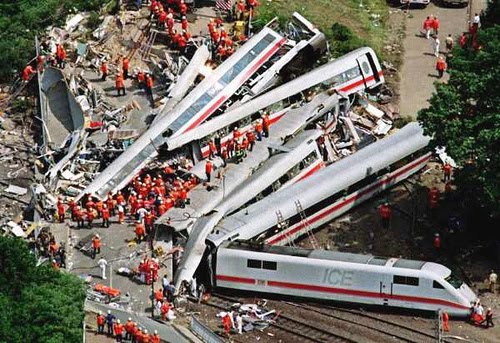
In the famous Eschede rail disaster (pictured above), the train was only travelling at 125 mph, yet by the time a passenger was able to report that a wheel had fallen off, within seconds the train derailed leaving 101 persons dead and 88 injured. You may find a detailed listing of pre-1950 through January-2011 railroad accidents here. It appears that instead of addressing the current dilemma, the administration has once again taken the high road to solving imagined 23rd Century problems.
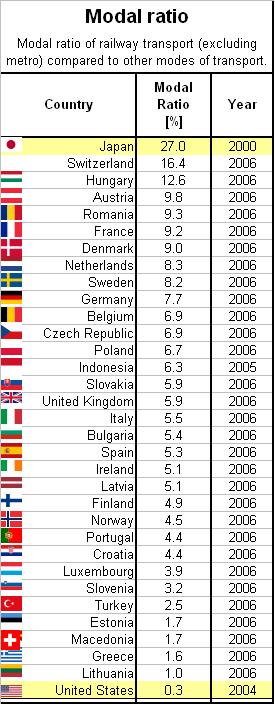
Modal Ratio - click to enlarge

Demand / Benefit

Rail usage statistics reflect not only the “popularity” of rail travel (for example, in Japan) but also the geography of the country. “For instance, the United Kingdom is a relatively small, densely populated country where many more short journeys are made compared to a larger, much less densely populated country such as the United States. To gauge the true importance of rail travel, the number of journeys (however short or long) needs to be calculated.

By this method one finds that the number of intercity rail journeys per year in the United States per inhabitant is so small as to be almost immeasurable. The U.S. figure is approximately 0.08 journeys per inhabitant per year, compared with the United Kingdom’s figure of 17.54 journeys per person. These statistics imply that Britons use the train 219 times more than Americans.

So while perhaps high-speed rail would be important in counties like China, Japan, and the United Kingdom it will have very little impact in the United States. In other words, there is very little demand for intercity rail transportation in the U.S., in spite of the administration’s delusional scheme. Where I come from, that’s not exactly a smart strategy.

Investing any money in any venture which lacks enough demand to recover said investment, along with a reasonable profit, is just plain foolish. While the U.S. has a population of roughly 305,000,000, the National Association of Railroad Passengers (NARP), a Washington, DC based lobbyist, can only boast in membership of approximately 23,500, representing a whopping 0.0077% of Americans.

—————–

Supply / Cost

According to a May 2009 report in the Business Insider, a true national high-speed rail network would cost more than $500 billion. California is attempting to build a true high-speed rail line between San Francisco and Los Angeles capable of top speeds of 220 miles per hour and average speeds of 140 miles per hour. The environmental analysis report for the California high-speed rail had projected costs of $33 billion for just 400 miles. Meanwhile, the Midwest Rail Initiative had projected costs of $7.7 billion for 3,150 miles of moderate-speed rail. That’s $82 million per mile for true high-speed rail (partly because the California project goes through some mountains) and only $2.4 million for moderate-speed rail.

All things being equal, high-speed rail will cost 10 to 12 times more than moderate-speed rail. Knowing this, the administration’s idea is to press forward in a “patchwork fashion” (i.e. Spend $53 billion here and there to get it started, and then beg for more cash every year). I guess it would be nice if we had an extra $500 billion to burn, and even nicer if there was any real demand to support the plot. But, maybe there’s a way to make this all work out after all.

Mandatory Ridership

Perhaps like Obamacare, Obamarail could be funded by requiring every citizen to purchase a ‘mandatory’ seasonal rail pass. The government could even implement another “cash for clunkers” program, but this time when you bring in the old gas-guzzler for crushing, you get a discount on season rail passes. And if you are uncooperative, refusing to participate in the government’s mandatory rail program, you would pay a tax (but they would just call it a penalty). The government could even make the case that mandatory rail travel is covered under the Commerce Clause, because unless everyone buys a ticket, travel by high-speed rail would be cost prohibitive for the 0.0077% who really need to ride.

The IRS could then be called upon to implement the enforcement portion by requiring that a unique national rail ticket number be entered on everyone’s income tax return. And to put the icing on the cake, the CBO could make wildly unsubstantiated claims about how Obamarail will save the nation trillions of dollars over the next century, or some nonsense. Yeah, well, I have an idea about how to save trillions of dollars in the future too. My idea involves not squandering the next $53 billion in present value dollars – today, but as stated above, “who cares what the citizens want”.

The Bullet Train to Nowhere

When this despotic patchwork is complete, only then will we know whether it worked, but first, we have to squander $500 billion on Obamarail in order to find out. Imagine a nation where workers are able to take ‘shovel ready jobs’ hundreds of miles from home, to return once or twice per year via high-cost, oops, I mean high-speed rail, and you have China. The contention is that $53 billion is such a small price to pay for another patchwork adventure in government-side economics. In government-side economics, if the square peg doesn’t fit, then you hit it with a hammer, right? And if it still doesn’t work, then you simply go out on the campaign trail and convince everyone that it did.

In spite of having over-spent by more than $3 trillion during the past two years, they surmise that their only failure was not having spent enough. Do you suppose that if the federal government borrowed and spent another $3 trillion it would do the trick? ‘Maybe next time it will be different! I mean, it’s not like the nation has a fiscal problem or anything.’ Face it, this isn’t supply-side economics, and it’s definitely not demand-side, so that leaves only one possibility; it’s a government-run bullet train to nowhere.

This doesn’t sound like ‘winning the future’ to me. It sounds more like a bullet train to bankruptcy, or better yet, like ‘losing your future’. I mean the one in the near-term, in November of 2012. Are you ready for another shellacking?

Other References:

http://safetydata.fra.dot.gov/OfficeofSafety/publicsite/on_the_fly_download.aspx

http://articles.baltimoresun.com/2011-02-09/features/bs-md-lahood-transportation-20110209_1_high-speed-rail-high-speed-train-plan-east-west-light-rail

Keepin’ It Real: Jobs Lost or Squandered

Experiments After Sputnik

Stimulus: Failure to Launch

– By: Larry Walker, Jr. –

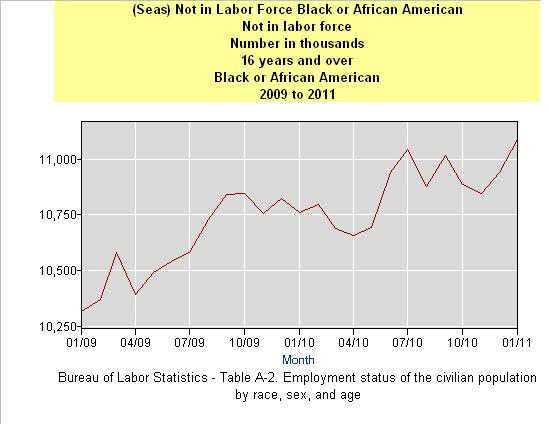
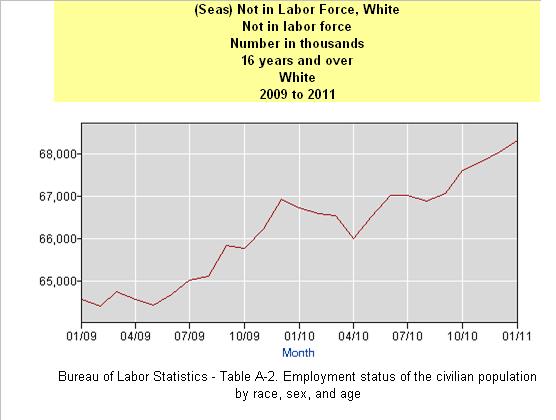
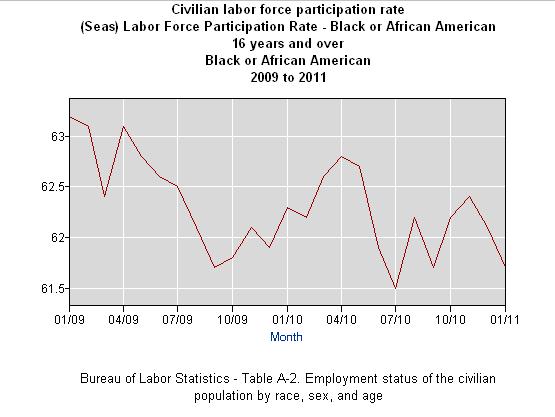
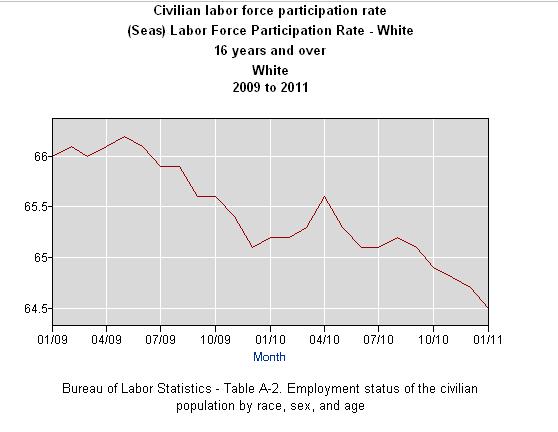
Can we call the American Recovery and Reinvestment Act of 2009 (ARRA) a failure yet? After all, the number of black and white Americans who are no longer counted as part of the labor force has reached a record high under the present White House occupant. Is this good or bad? According to the Bureau of Labor Statistics, since the beginning of February of 2009, an additional 772,000 black Americans, and an inconceivable 3,743,000 white Americans have left the labor force. Additionally, the labor force participation rate among both white and black Americans has declined to the lowest level since 1984. From the start of February of 2009 through January of 2011 the labor force participation rate among whites fell from 66.0% to 64.5%, while the participation rate among blacks declined from 63.2% to 61.7%.

If he was so wrong about the Stimulus Bill, couldn’t he also be wrong about health care and every other one of his experimental proposals?

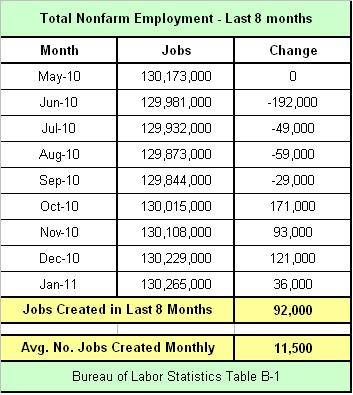
In the past 8 months, only 92,000 net jobs have been created, so exactly how are we better off? Has the back of the Great Recession really been broken? I would say not.

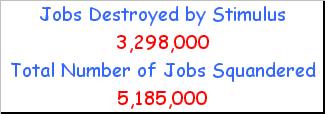
According to my previous post which is based on data which is publicly available from the Bureau of Labor Statistics, through January of 2011 the Stimulus Bill has resulted in a loss of 3.3 million jobs, and that is in addition to the number of jobs lost from the beginning of the recession until that time. The total number of jobs lost or squandered under the policies of the current White House occupant has been 5.19 million.

Revised: Stimulus Jobs Tracker

Stimulus Jobs Tracker

Step 1: Honesty – Get honest (with yourself).

Video: Vanguard TV3 Failed Rocket Launch after Sputnik

——————–

Sources:

http://stats.bls.gov/news.release/empsit.t02.htm

http://stats.bls.gov/webapps/legacy/cpsatab2.htm

Final: Tracking the 5.19 Million Jobs Obama Squandered

Day 745

“We have a system that increasingly taxes work and subsidizes nonwork.” ~ Milton Friedman ~

– By: Larry Walker, Jr. –

Formerly: Tracking the 5.2 Million Jobs Obama Squandered (published on 10/29/2010) *

Obama’s economic stimulus bill was sold to us with the promise of creating 3.5 million jobs by January of 2011. Well, since January has now passed, it’s time to tally up the results. My previous post, Tracking the 5.2 Million Jobs Obama Squandered, was about dead on. You can call it 5.19 million jobs squandered if you like, but it’s still 5.2 million when rounded off.

For a refresher, “Tracking the 3.5 million jobs Obama will save or create” was the title of a blog post, last updated on January 8, 2010, on a website named Understanding The Market – Capire Il Mercato. In a note, the author, Cole Kendall stated, “I will make the calculations in a way that provides a “best case” to the Obama team.” Since Mr. Kendall decided to give up on his tracking operation at the end of 2009, I decided to follow it through to it’s dire conclusion.

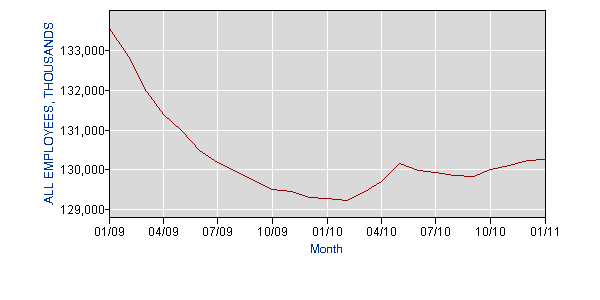
Using the same criteria as originally outlined by Obama’s (now former) economic team, jobs are defined by counting the total non-farm employment, from Table B-1 of the Bureau of Labor Statistics, “Employment Situation Report” (as seasonally adjusted). Instead of boring you with the month-by-month data, I went ahead and cut to the chase, skipping from December of 2009, where Mr. Kendall left off, to January of 2011, up to the latest data available from the 02/04/2011 jobs report.

Following is an excerpt from Cole Kendall’s original blog post, followed by my revised stimulus jobs tracker, and a brief analysis:

In an earlier essay I tried to explain President Obama’s notion of saving or creating jobs. The stimulus plan bill was passed by both houses of Congress last night and the final plan was a bit smaller than the earlier version, so the President now asserts that the plan will save or create 3.5 million jobs.

This post will track the 3.5 million jobs. There are a number of ways to measure jobs in the US. Some people work several different jobs at a time while others change employers frequently, so measuring jobs is not as simple as it might seem. There was a cartoon from the Clinton era showing the President speaking at a dinner that he had created 8 million jobs and an overworked waiter thinking that he had three of them. Obama’s economic team defined jobs [as those contained in the Department of Labor’s establishment payroll data] (see here for their original report).

Just before the stimulus bill passed the Department of Labor issued a report (see here). The number of people working (see Table B1, about 2/3 of the way down, with the heading “Establishment Data”) was 134,580,000 (seasonally adjusted). This is a preliminary measure and will be revised next month and probably revised again in a year. Using the Obama team methodology, without the stimulus bill employment would be expected to fall by around 1,613,000 jobs during the next two years so that without the stimulus bill we would expect employment to be 132,967,000 in January 2011.

With the revised estimate of 3,500,000 jobs “saved or created”, employment should be 136,467,000, creating 1,887,000 in addition to the 1,613,000 jobs saved.

The table below will be updated with every new employment release to see how jobs have changed. The first column is the actual number of payroll jobs starting with the month before the stimulus plan passed; the second column is the total change in employment since the month when the stimulus plan passed and the third column shows the gap remaining of jobs to be “created” in order to reach the target.

Revised: Stimulus Jobs Tracker

Stimulus Jobs Tracker

The conclusion is pretty grim, and certainly doesn’t mesh with what Obama has been saying out on the campaign trail. The sad truth is that instead of creating 3.5 million jobs, since it was passed, the stimulus plan has instead resulted in the loss of 3.3 million jobs. Since the stimulus plan was supposed to have saved 1,613,000 jobs, in addition to creating 1,887,000 jobs, by January of 2011, and since it has actually resulted in the loss of 3,298,000 jobs, Obama’s Economic Stimulus has fallen short of the original target by 5,185,000 jobs.

I don’t know what you call this, but I call it a colossal failure. Perhaps it’s time for an orderly transfer of power? Do we need another stimulus plan, or just another President? I don’t think Obama is helping his case by roaming around the country making false claims in what appears to be a frantic effort to get re-elected, especially when he’s the one who screwed this up. The thought of trillions in deficit-financed spending flushed down the drain, to no avail, doesn’t bode well for Democrats, nor for Mr. Obama.

Obama was a job creator from day one.” ~ Nancy Pelosi

You can fool some of the people all of the time, and all of the people some of the time, but you can not fool all of the people all of the time. ~ Abraham Lincoln (R-IL)

Sources:

http://stats.bls.gov/news.release/empsit.t17.htm

http://stats.bls.gov/webapps/legacy/cesbtab1.htm

http://understandingthemarket.com/?p=63

Table B-1 Data: Total Non-Farm Employment (In Thousands, As Seasonally Adjusted):

http://stats.bls.gov/webapps/legacy/cesbtab1.htm

Amtrak: A Lesson in Government Takeovers

Poison Pill

– By: Larry Walker, Jr. –

The Quest for Affordability

“They say it’s a government takeover of health care, a big lie just like Goebbels. You say it enough, you repeat the lie, you repeat the lie, you repeat the lie, and eventually, people believe it.” ~ Rep. Steve Cohen (A Government Employed Psychotic)

“If it ain’t broke, break it, and then when it’s broke, nationalize it.” ~ A Wayward Progressive

When facing a régime hell-bent on government takeovers, one must first understand exactly what a government takeover is, how one occurs, and whether or not a takeover is good for the nation. Once we understand what a government takeover is, how one occurs, and how it will end; and once convinced that a takeover is indeed occurring, we can make up our own minds about how to handle it. Of course, proponents of government takeovers will always deny that one is occurring. Such denial is generally accompanied by calling anyone who would so hint a liar, or Nazi propagandist.

According to advocates of government takeovers, any private entity which makes a profit is bad and worthy of increased regulation, and once bankrupted, in certain cases, worthy of takeover. Under the rules for government takeovers, the objective is government control of everything, from private industry to personal lives, and everyone is a loser. The only thing that matters for most politicians is that they keep their own government backed jobs, retirement security, and benefits; and the best way for them to ensure this is through increased government control.

The Government Takeover of Passenger Railroads

For example, before the National Railroad Passenger Corporation (a.k.a. AmTrak) existed, there was a profitable private passenger rail industry. But profits being deemed a bad thing by both big government and unions, meant that its days were numbered. “Bring them down”, they decried. “Top down, bottom up, inside out.” While unions pushed for higher pay, greater retirement security, and more benefits, big government tightened regulations — limiting the amount railroads could charge for their services. The attack came by big government from the top, and unions from the bottom. The only thing lacking was a thrust from the inside out.

The first line of attack would come from the Interstate Commerce Commission which prevented increases in the amounts that privately owned railroads could charge both shippers and passengers. This meant that the only way in which railroads could become more profitable was through cost-cutting. But the ability to slash costs was greatly hampered by agreements with aggressive employee unions. Eventually, the railroads turned to mergers as the only way of escape. What else can an industry do once it has been obstructed from responding to changing market conditions?

In 1968, the New York Central and Pennsylvania railroads merged creating Penn Central, which would result in a virtual monopoly within the U.S. passenger rail industry. But the nation would be shocked when only two years later, in June of 1970, Penn Central declared bankruptcy. At the time, it was the largest corporate bankruptcy in American history. But this was only the beginning. Behind the scenes a government takeover was being staged from the inside out.

In May of 1967, the National Association of Railroad Passengers (NARP) was founded to lobby for the continuation of passenger trains in the United States. Imagine that, a few months before the railroads were forced to merge, and just three years before they would go bust; a government takeover was already in the works. This was the missing link, an attack from the inside out. It was big government from the top, employee unions from the bottom, and now passengers themselves (at least in name) were demanding continued services, profitability be damned. The man-made crisis was complete and there was now enough force to justify a full blown government takeover.

The NARP’s lobbying efforts were successful at dividing both political parties. The Democrat Party was opposed to any sort of subsidies to privately-owned railroads, and the Republican Party feigned opposition to the nationalization of the industry. Sound familiar? But in the end, both Democrats and Republicans would compromise for fear of being responsible for the extinction of passenger trains. So what did big government do? What they always do, they agreed to both subsidize and nationalize the passenger rail industry.

In 1971, the federal government stepped in and created Amtrak, a virtual government agency, which began to operate a skeleton service on the tracks of Penn Central and other U.S. railroads. Today, the federal government owns all of the preferred stock in AmTrak, has invested $32.4 billion of taxpayer’s money into the government owned corporation over the past 40 years, and in return, AmTrak has netted total losses of $27.1 billion. In fiscal year 2010, the federal government pumped in an additional $2.4 billion, and AmTrak promptly lost $1.4 billion of it, before the red ink dried. Besides the federal government, the only other shareholders in AmTrak are the old railroad companies themselves, which are now consolidated into other private companies.

The Fate of Shareholders

AmTrak initially issued 10,000,000 shares of common stock, with a par value of $10 per share, to the bankrupt railroads in exchange for their assets. In fact, American Financial Group (AFG) still owns 5.2 million shares which were acquired directly from Penn Central. Although Congress, in 1997, ordered AmTrak to buy back all of its common shares by the year 2002, AmTrak has yet to have the funds, and has in fact been totally dependent on additional government subsidies just to remain viable.

In 2002, AFG filed suit against AmTrak seeking $52 million, plus interest (5.2 million shares @ $10). Two years prior, AmTrak had offered to buy back all of its common shares for a measly three cents per share. Of course none of the common stock holders accepted such a ridiculous offer. Who in their right mind would settle for $156,000 in return for a $52 million investment made some 40 years prior? This is a fine example of what private stock and bond investors may expect in the wake of a government takeover. The original stockholders would have gotten a better deal through normal bankruptcy proceedings, but because of the government’s takeover, everyone got screwed, including generations of unborn taxpayers. It would be wise to remember this as the government attempts to takeover the health care industry.

The Government Takeover of Health Care

And that brings us to the main point of this post, the government’s attempted takeover of the health care industry. The only difference between what I will call AmHeal, and AmTrak, is that the health care industry isn’t broke (yet). But regulations are coming which will attempt to restrict the amount that health insurance and health care providers may charge their customers, while increasing the burden of services they must provide. These regulations will naturally cripple the industry from the top down and from the bottom up.

Health care insurers and providers will quickly realize that the only way they can remain profitable is through cost-cutting, yet their ability to cut costs will be restricted by the increased amount of services they will be required to provide. With millions more customers having been mandated by the federal government, and with restrictions on the amount which may be charged, companies will begin to consolidate in order to achieve economies of scale. But just like the railroads, their attempts will fail. In the meantime, labor unions and progressive community organizers are seeking to stir up public support by way of demanding that health insurers and providers do more with less, profitability be damned. In the end, we will wind up with government run health care, just like many have warned all along.

Unless a poison pill strategy is implemented to derail this insidious disaster, we will soon see the AmTrak of health care, AmHeal. And AmHeal will be just as disastrous as AmTrak in every way. Over time, AmHeal will not only lose billions of dollars per year, but potentially trillions, and will eventually bankrupt the United States of America. Investors in health care companies will be among the first to get burned, as health care companies begin filing for bankruptcy. This will be the final blow to the $2.3 trillion health care industry, and the end of 1/6 of our free market economy.

So how do we derail AmHeal before it reaches the tarmac? In dealing with a government takeover, a poison pill must be taken from within the government itself. We must takeover the government with a top down, bottom up, and inside out approach. We the people must elect politicians dedicated to defunding all regulatory aspects of the affordable health proposal, and then put pressure on the political system from the bottom up. Then all private industry must place additional pressure on the government by requesting waivers, thereby opting out of the government’s proposed mandates. Tea Party advocates, moderates, centrists, conservatives, State governments, lobbyists, and proponents of the free-market must band together. We know that we must stop the government takeover of health care, and that is precisely what we are doing, and what we will accomplish.

References:

Penn Central Transportation

National Association of Railroad Passengers

Major Acts of Congress – Rail Passenger Service Act

AMTRAK REFORM AND ACCOUNTABILITY ACT OF 1997

History of U.S. Gov’t Bailouts

Amtrak management = worthless Amtrak stock

RAILROADS: Perils of Penn Central

Social Security: A Breach of Trust

Reviewed

– By: Larry Walker, Jr. –

Notes on 2010 Financial Statements of the U.S. Government

“I am a firm believer in the people. If given the truth, they can be depended upon to meet any national crisis. The great point is to bring them the real facts.” ~ Abraham Lincoln

“The ignorance of one voter in a democracy impairs the security of all.” ~ John F. Kennedy

Proponents of a bankrupt federal government continually proclaim that Social Security is solvent. They boast in the Trust Fund’s fictitious surplus balance of $2.6 trillion as proof. But even Note 24, of the United States Government’s Notes to the Financial Statements, for the year ended September 30, 2010 states that while, “In the private sector the term “trust fund” refers to funds of one party held and managed by a second party (the trustee) in a fiduciary capacity” that, “In the Federal budget, the term “trust fund” means only that the law requires a particular fund be accounted for separately, not that funds are actually set aside.” It further states that, “…as far as the federal government is concerned, earmarked funds, including the Social Security Trust Fund are the property of the federal government.”

In other words, as far as the government is concerned, any money it receives on our behalf may be spent in any way it desires, as long as an appropriate book entry is made. The money we have been paying in towards retirement security has already been spent. Note 24 goes on to verify this by stating that, “The government does not set aside assets to pay future benefits or other expenditures associated with earmarked funds (i.e. Social Security).” And further that, “The cash receipts collected from the public for an earmarked fund (i.e. Social Security) are deposited in the U.S. Treasury, which uses the cash for general Government purposes.”

As I explained in “The Social Security Bust Fund”, the federal government has summarily confiscated and spent every dime of the $2.6 trillion surplus, which would have comprised the Social Security Trust Fund, and has replaced it with non-marketable, special-issue, Treasury securities. Since these special-issue securities are an asset to the Trust Fund and a liability to the U.S. Treasury, they therefore cancel each other out and, according to Note 14, “are eliminated in the consolidation of these financial statements”. However, as we shall see later, they actually do appear on the financial statements and are detailed in Note 24.

During any fiscal year, when a trust fund’s disbursements exceed its receipts, then these special-issue securities require redemption. Note 24 warns us that, “Redeeming these securities will increase the Government’s financing needs and require more borrowing from the public (or less repayment of debt), or will result in higher taxes than otherwise would have been needed, or less spending on other programs than otherwise would have occurred, or some combination thereof.” Since less repayment of debt is a non-issue, the only options the government has in order to pay back what it has stolen from the Trust Fund are to borrow more from the public (i.e. increase the debt ceiling indefinitely), raise taxes, or cut spending on other programs.

In effect, there is no Trust Fund. The total amount of Social Security taxes collected within each fiscal year is spent on that year’s benefit payments. If the total receipts exceed the amount of benefit payments, then the surplus is taken by the Treasury and spent on general expenses. However, if the amount of benefit payments exceeds receipts, such as happened in 2010, then the Treasury must borrow more from the public in order to reimburse the Trust Fund. In the fiscal year ended September 30, 2010, the government collected a total of $552.8 billion in Social Security taxes, and paid out $574.9 billion in benefits. The difference was made up by the Treasury paying out some of the accrued interest that it owes on past borrowings. Of course, the interest which was paid out had to be borrowed from the public because, the government has been running trillion-dollar plus budget deficits for the past two years.

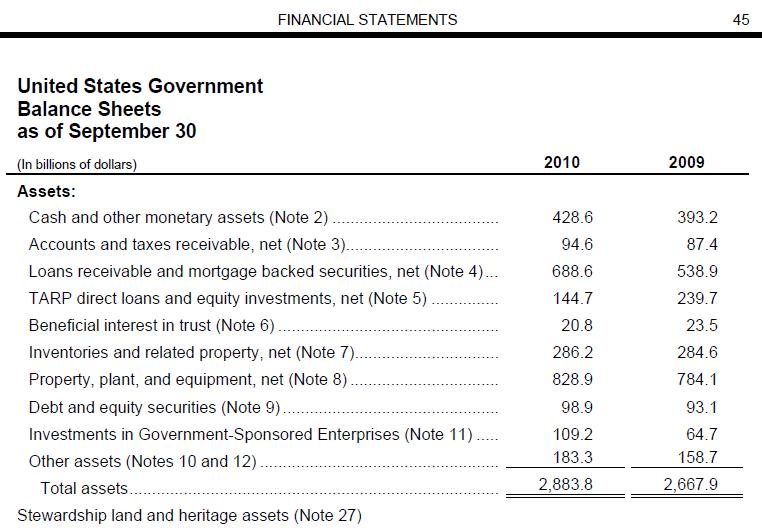
You should review the financial statements of the United States Government for the fiscal year ended September 30, 2010 for yourself, and draw your own conclusions. I have and I am sad to report that the Social Security Trust Fund is nothing more than an empty promise. Let’s check the balance sheet.

As of the close of fiscal year 2010, the federal government had total assets of just $2.9 trillion. As you can see above, there is no account named the “Social Security Trust Fund” which contains a balance of $2.6 trillion. The sad truth is that the federal government would have to liquidate nearly all of its assets including property, plant and equipment in order to raise the $2.6 trillion which it owes to the Social Security Trust Fund. So where’s the money, you ask? Like I said from the beginning, “It has already been spent.”

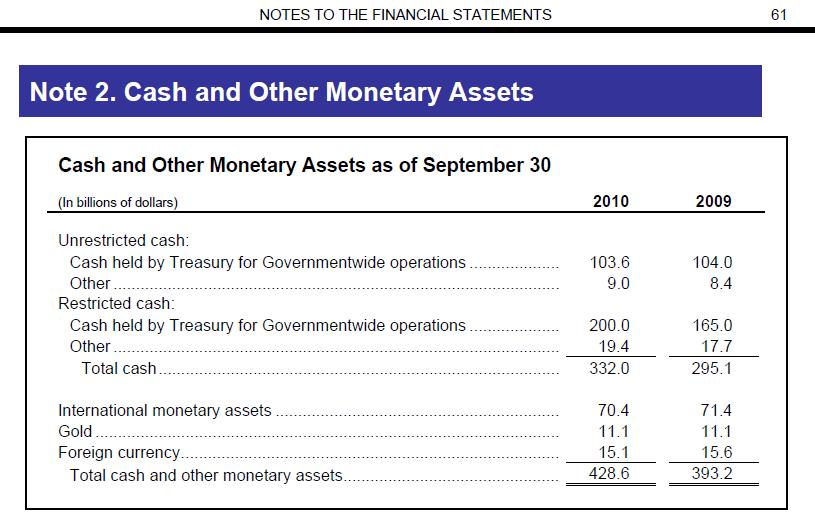
Among the government’s assets, only $428.6 billion was classified as “cash and other monetary assets”. Digging down into Note 2 of the financial statements, we discovered that the actual amount of cash was just $332.0 billion. Further, we discovered that out of this $332.0 billion, only $112.6 billion (103.6 + 9.0) was actually “unrestricted”, meaning available for use on government operating expenses. The remainder, which was listed as “restricted”, included $200 billion which was held by the Federal Reserve in the Supplementary Financing Program (SFP*), $18.6 billion held by the Foreign Military Sales program, and another $0.8 billion which was curiously omitted from explanation.

The other monetary assets listed were International Monetary Assets of $70.4 billion, Gold of $11.1 billion, and Foreign Currency of $15.1 billion. (It’s interesting to note that the government owns 261,498,900 troy ounces of gold, and that its book value is listed at $11.1 billion, or at the statutory value of just $42.22 per ounce. If valued at the fair market value of $1,307 per troy ounce on 9/30/2010, then the value would actually have been $341.8 billion.) A detailed explanation of cash and other monetary assets may be found in the narrative section of Note 2.

The Supplementary Financing Program (SFP)*

It’s worthy of noting that the SFP is a temporary program that deposits cash with the Federal Reserve to support Federal Reserve initiatives aimed at addressing the ongoing crisis in financial markets. It’s interesting to note that the Federal Reserve has control of more of the government’s cash assets than the U.S. Treasury, and that the crisis in the financial markets is deemed to be “ongoing”. Following is a more detailed explanation of the SFP as reported by Bloomberg, on February 25, 2010:

“The Supplementary Financing Program, in which the Treasury Department sells bills and places the proceeds in a Fed account, will be part of the Fed’s strategy for rolling back its extraordinary assistance to the economy and financial markets, the central bank said in its monetary policy report to Congress yesterday. The report also said the program was temporary and wasn’t an essential element of the Fed’s toolkit.”

“The program helped the Fed manage the more than doubling of its balance sheet as it battled the financial crisis and will be part of the central bank’s eventual efforts to withdraw more than $1 trillion in excess bank reserves.”

“The Treasury said the decision to move to $200 billion reflects the program’s outstanding balance between February and September 2009, before concerns about the debt ceiling forced the government to shrink the program. President Barack Obama this month signed a $1.9 trillion increase in the limit to $14.3 trillion.”

Show Me the Trust Funds

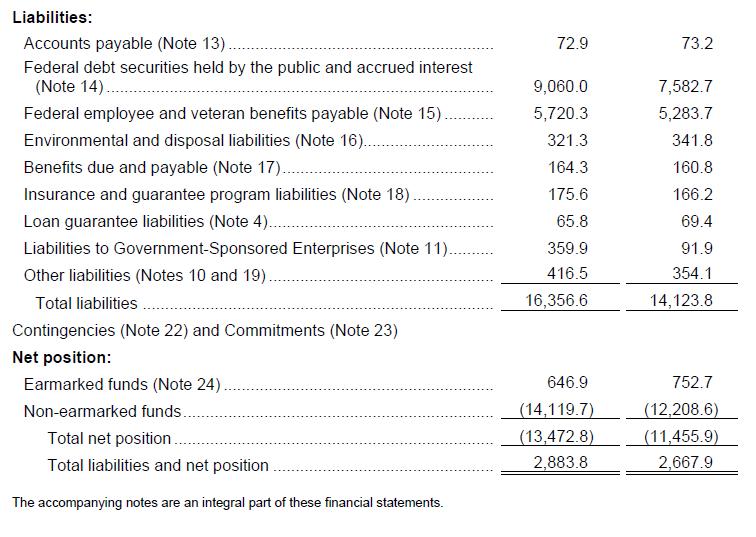
Where is the Social Security Trust Fund shown on the government’s financial statements? As you should understand by now, the government borrowed and spent all of the money and owes it back to the Trust Fund, however, you won’t find an entry matching $2.6 trillion on the balance sheet. Per Note 14, “Intragovernmental debt holdings represent the portion of the gross Federal debt held as investments by Government entities such as trust funds, revolving funds, and special funds. This includes trust funds that are earmarked funds. For more information on earmarked funds, see Note 24─Earmarked Funds. These intragovernmental debt holdings are eliminated in the consolidation of these financial statements.” However, the net amount of all of the government’s sacred trust funds does appear in the Net Position section as Earmarked Funds in the amount of $646.9 billion. What this means is that when all of the government’s various trust funds are netted together, the $2.6 trillion Social Security Trust Fund is reduced to a surplus of just $646.9 billion.

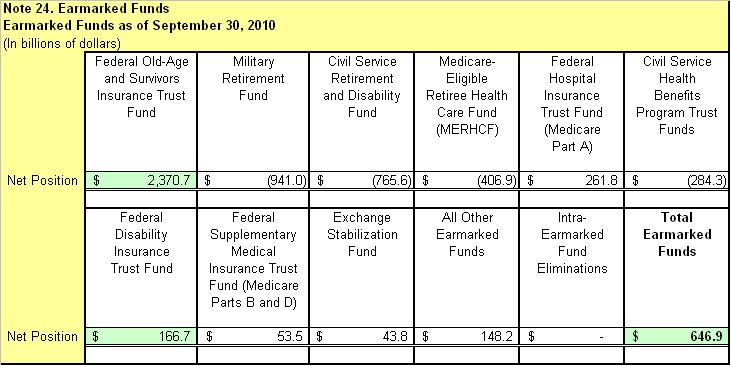
I created the following condensed table based on the one shown in Note 24 (the original is too large to be shown here). As you can see, when the $2.6 trillion surplus balances of the Federal Old-Age and Survivors Insurance Trust Fund, and the Federal Disability Insurance Trust Fund are netted against a $941.0 billion deficit in the Military Retirement Fund, a $765.6 billion deficit in the Civil Service Retirement and Disability Fund, a $406.9 billion deficit in the Medicare-Eligible Retiree Health Care Fund, and the rest of the trust funds, the net balance is just $646.9 billion. This is shown as the amount of “Earmarked Funds” which the government owes to itself out of its $14.1 trillion of accumulated deficits. In financial terms, the federal government has accumulated losses of $14.1 trillion since its inception. It may also be the only entity on earth with the audacity to proclaim that the $2.6 trillion, which it borrowed from funds which were supposed to have been held in trust, is somehow secured by its $14.1 trillion in accumulated losses. In reality, both the Federal Government, and the Social Security Trust Fund are insolvent.

Earmarked Funds (click to enlarge)

In conclusion, the only options that the government has of recovering the $2.6 trillion surplus, which our generation has dutifully paid into Social Security, are to either; (1) borrow more money from the public, (2) increase taxes, or (3) reduce spending on other programs.

  1. Borrowing more from the public, in order to pay back that which has already been borrowed from the government, could put the nation’s credit rating at risk, thus jeopardizing not only Social Security, but our National Security.
  2. Increasing taxes on the public in order to make up for what we have already paid in taxes, which should have been set aside for our welfare instead of having been squandered, is not acceptable.
  3. The only viable option is for the federal government to fundamentally restructure, privatize, or discontinue every governmental agency, program, subsidy, enterprise, and special project which does not take in more money than it spends. This includes all Government Sponsored Enterprises, the Postal Service, and Amtrak. If it’s not making money, then it must either be restructured in a way so as to become profitable, sold to the private sector, or terminated. After that comes the selling off of government owned property, plant and equipment, gold and any other non-productive asset held by the federal government.

References:

Financial Statements of the United States Government for the Years Ended September 30, 2010, and 2009 – http://www.fms.treas.gov/fr/10frusg/10stmt.pdf

United States Government Notes to the Financial Statements for the Years Ended September 30, 2010, and 2009 – http://www.fms.treas.gov/fr/10frusg/10notes.pdf

Current Report: Financial Report of the United States – www.fms.treas.gov/fr/index.html

Fed Says Treasury’s SFP Bills Advance Monetary-Policy Goals – http://www.businessweek.com/news/2010-02-25/fed-says-treasury-s-sfp-bills-advance-monetary-policy-goals.html

Derailed by Amtrak: The Money Drain

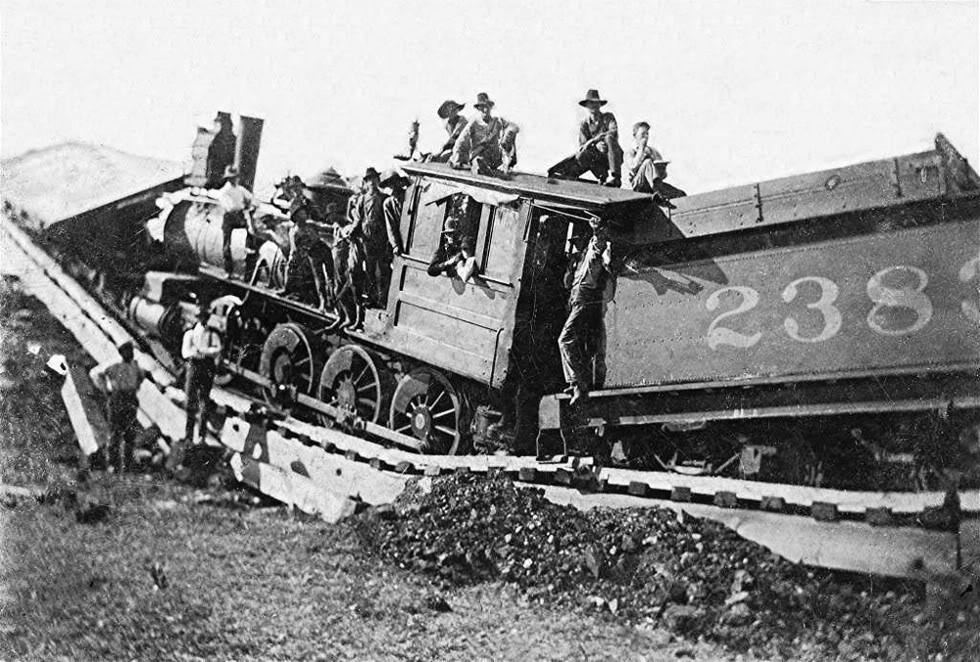
Train Wreck

40 Years in the Wilderness

– By: Larry Walker, Jr. –

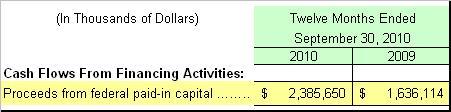
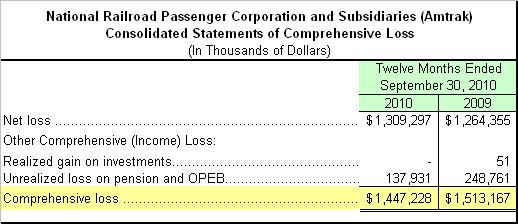
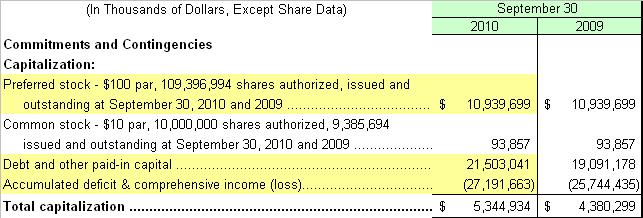
Since 1971, the federal government has invested a total of $32.4 billion into the National Railroad Passenger Corporation (a.k.a. “Amtrak”). In return for this lucrative investment of taxpayer’s dollars, Amtrak has accumulated total net losses of $27.1 billion. If we were to average our investment over the last 40 years, it would equal approximately $810 million per year, yet in 2009 and 2010 U.S. taxpayers have pumped in an additional $1.6 billion and $2.4 billion, respectively. Thus it appears that Amtrak’s drain on our collective pocketbook is increasing. Likewise, if we were to average Amtrak’s losses over the past 40 years they would equal approximately $677 million per year, yet in 2009 and 2010 U.S. taxpayers have incurred losses of $1.5 billion and $1.4 billion, respectively. So it appears that our losses are also accelerating.

Paid In Capital

——

Comprehensive Loss

According to the latest independent auditors’ report, which was issued on December 16, 2010, “The Company has a history of substantial operating losses and is dependent upon substantial Federal government subsidies to sustain its operations…. Without such subsidies, Amtrak will not be able to continue to operate in its current form and significant operating changes, restructuring or bankruptcy may occur. Such changes or restructuring would likely result in asset impairments.” And that is exactly what needs to happen. Any entity which is run-by, backed-by, or subsidized-by the federal government and not able to sustain itself without reliance on the general fund should be either privatized, or shut down. The following excerpts are from the independent auditors’ report:

KPMG LLP
1676 International Drive
McLean, VA 22102

Independent Auditors’ Report
The Board of Directors and Stockholders
National Railroad Passenger Corporation:

{….} The Company has a history of substantial operating losses and is dependent upon substantial Federal government subsidies to sustain its operations. The Company is operating under continuing resolutions through December 18, 2010 as discussed in Note 2 to the consolidated financial statements. The Company expects to receive additional interim Federal government funding under continuing resolutions until the fiscal year 2011 funding is approved. There are currently no Federal government subsidies appropriated for the fiscal year ending September 30, 2012 (“fiscal year 2012”). Without such subsidies, Amtrak will not be able to continue to operate in its current form and significant operating changes, restructuring or bankruptcy may occur. Such changes or restructuring would likely result in asset impairments. {….}

December 16, 2010

{….}

NOTE 1: NATURE OF OPERATIONS

The National Railroad Passenger Corporation (“Amtrak” or the “Company”) is a passenger railroad. The United States government (the “Federal Government”) through the United States Department of Transportation (the “DOT”) owns all issued and outstanding preferred stock. Amtrak’s principal business is to provide rail passenger transportation service in the major intercity travel markets of the United States. The Company also operates commuter rail operations on behalf of several states and transit agencies, provides equipment and right-of-way maintenance services, and has leasing operations.

NOTE 2: BUSINESS CONDITION AND LIQUIDITY
Operations and Liquidity

Amtrak was incorporated in 1971 pursuant to the Rail Passenger Service Act of 1970 and is authorized to operate a nationwide system of passenger rail transportation. The Company has a history of recurring operating losses and is dependent on subsidies from the Federal Government to operate the national passenger rail system and maintain the underlying infrastructure. These subsidies are usually received through annual appropriations. In recent fiscal years appropriated funds for Amtrak have been provided to the DOT, which through its agency the Federal Railroad Administration (the “FRA”), provides those funds to Amtrak pursuant to operating funds and capital funds grant agreements, respectively. Amtrak’s ability to continue operating in its current form is dependent upon the continued receipt of subsidies from the Federal Government.

{….}

Audited Consolidated Financial Statements – Fiscal Year 2010

I love traveling by Amtrak but, to be honest, I have only ridden with them two or three times in the last 40 years. Amtrak, we love you, but you’ve got to go. If Amtrak is not able to make a profit, and thus return money to its investors, namely us, then what good is it? I could have flown to Cleveland for half the price that I paid for a sleeper car, and in a couple of hours versus the twenty-four that it took Amtrak. I literally can’t believe that having paid over $1,500 to ride from Atlanta to Cleveland, and back, that these guys can’t make a profit. I mean come on. Investing more public money into new rails and high speed trains is not the answer. Do you really believe that more people will ride trains if they were just a little bit faster? One can only imagine how much higher the fares (and losses) would be after such nonsense.

Capitalization (click to enlarge)

It’s time to fish, or cut bait. If the private sector can’t make Amtrak profitable, then it can’t be done. Private investors are not dumb enough to continue investing in something month-after-month, year-after-year which has never and will never return a profit, nor are taxpayers. If Amtrak were owned by the private sector, it would be no more. That’s just the way it is in the real-world. At the same time, if there is any hope at all, it lies within the private sector. It’s easy for the government to keep flushing good money down the drain, because it’s not their money. It’s our money, so let us make the choice. No one said it was going to be easy. It’s time to dump Amtrak.

The mandate: Amtrak will make the necessary structural changes to become profitable without additional governmental subsidies, and will return the taxpayers investment to the U.S. Treasury by the end of this fiscal year. If Amtrak continues to incur losses over the current fiscal year, then at close of business on September 30, 2011, its assets shall be sold and all proceeds returned to the Treasury.

Photo: http://media.photobucket.com/image/trainwreck+/rcoiteux/TrainWreck01.jpg

Source: Audited Consolidated Financial Statements – Fiscal Year 2010

Postal Service OIG Discovers $75 Billion Overpayment, Again

Government-Run

Will Obamacare Go Up In Flames Too?

– By: Larry Walker, Jr. –

“You’ve got a lot of private companies who do very well competing against the government — UPS and FedEx are doing a lot better than the Post Office.” ~ Barack Obama (Aug. 2009)

According to an article posted on federalnewsradio.com, on June 28, 2010, the United States Postal Service, Office of Inspector General (OIG) discovered that the Postal Service had made a $75 billion overpayment to the Civil Service Retirement System (CSRS). However, the same problem had already been reported by the OIG back in April of 2004. Apparently nothing was done to correct the problem in 2004, and it doesn’t appear that anything has been done about it to date. (If this has since been resolved, please comment below, and point me to your reference.) Following is an excerpt from the aforementioned article:

In what could be the best game of Monopoly™ ever, Postmaster General John Potter may have just drawn a card that reads “Inspector General finds error in your favor. Collect $75 billion dollars.”

The Inspector General for USPS took a closer look at the Civil Service Retirement System and found massive overpayments dating back decades.

Michael Thompson, Director of Capital Investments for the Postal Service Office of Inspector General, explained for Federal News Radio, “the Postal Service, since 1972, has overfunded by $75 billion its share of civil service retirement and the reason for that is because the methodology that’s used is not comparable to the methodologies that’s used for all the other federal retirement funds.”

Thompson said the Office of Personnel Management, in deciding how much the Postal Service should pay into the CSRS, is currently using a different method developed in 1974. They’ve said they aren’t going to change unless Congress tells them to, according to Thomson.

“The money is sitting in the civil service retirement fund. It’s not as though the money is not there. It is there. It’s just that the Postal Service has continually paid more than it should have paid.”

All it would take, according to Thompson, is for either the OPM to make the change or for Congress to legislate it. That might seem simple enough, but with so much money involved, no one’s getting off the dime, literally.

http://www.federalnewsradio.com/index.php?nid=15&sid=1990598#

The article mentioned above is in line with a memo issued by the OIG on June 18, 2010 (excerpt below). I’m just wondering if anyone has “gotten off the dime” as of yet? I mean I know it’s only $75 billion, but one has to wonder just how many unresolved $75 billion overpayments are floating around Washington D.C., with its $14 trillion in debt and all. Where was it that the buck was supposed to stop again?

June 18, 2010

JOSEPH CORBETT
CHIEF FINANCIAL OFFICER & EXECUTIVE VICE PRESIDENT

SUBJECT: Management Advisory Report – Civil Service Retirement System Overpayment by the Postal Service (Report Number CI-MA-10-001)

This report presents the results of our review of the Civil Service Retirement System (CSRS) Overpayment by the U.S. Postal Service (Project Number 10YO036CI000). This report discusses the $75 billion CSRS overpayment by the Postal Service in fiscal years (FY) 1972 through 2009. The objective of this review was to assess the facts concerning this overpayment and identify any possible solution(s) to correct the overpayment to the benefit of the Postal Service. This review addresses financial risk.

http://www.uspsoig.gov/foia_files/CI-MA-10-001.pdf

Now if you look back through the records of the OIG, you will discover that a similar memo was issued back in April of 2004 (excerpt below). The 2004 memo stated that the Postal Service was making overpayments to the CSRS, and implied that the problem had been corrected. In fact, the memo states that, “Had the overpayments continued, the Postal Service would have overpaid its obligation by over $100 billion.” Well, apparently the problem wasn’t resolved, because a little over six years later the Postal Service had in fact, overpaid the CSRS by $75 billion. I wonder what happened to the other $25 billion!

April 9, 2004

MEMORANDUM FOR JOHN E. POTTER, POSTMASTER GENERAL, CHIEF EXECUTIVE OFFICER

FROM: /s/ (Scott Wilson for) David C. Williams, Inspector General

SUBJECT: Postal Service’s Funding of the Civil Service Retirement System (Product Number FT-OT-04-002)

This memorandum presents our opinion on the issues surrounding the Postal Service’s funding of the Civil Service Retirement System (CSRS) (Project Number 03XD009FT005). The objective was to analyze the outstanding issues pertaining to the Postal Civil Service Retirement System Funding Reform Act of 2003 (Public Law 108-18) and to provide our perspective on how the legislation affects the Postal Service and its stakeholders. We have included the differing viewpoints and positions that have been generated by affected groups, including the Department of the Treasury (Treasury), the Office of Personnel Management (OPM), the General Accounting Office (GAO), the Postal Rate Commission, the President’s Commission on the United States Postal Service (the President’s Commission), mailers, competitors, and the Postal Service.

GAO discovered that the Postal Service’s amortized payments to OPM for its CSRS liability were too large. Had the overpayments continued, the Postal Service would have overpaid its obligation by over $100 billion.

http://www.uspsoig.gov/foia_files/FT-OT-04-002.pdf

It looks like the federal government is just bleeding money on all fronts. Where government backed entities, like the Postal Service, should be turning a profit, instead we find, as the Washington Examiner reported in April of 2010, that “without serious reform [the Postal Service] was set to lose $7 billion in 2010 and $238 billion over the next 10 years…” Perhaps it’s time to end the era of government-sponsored, government-owned, and government-backed entities? One has to wonder, at this point, just exactly what they are backed by – an unlimited ability to incur debt? The time to repeal Obamacare is now. The time to cap the debt ceiling is now. Enough is enough.

Photo Credit: KRTV.com

Other References: Will Obama create the Post Office of health care?

The Social Security Bust Fund

Privatization

Opt Me Out

– by: Larry Walker, Jr. –

If it sounds too good to be true, it usually is” was a catchphrase used by the Better Business Bureau to alert the public to shady business practices. The phrase was in use since at least 1954. In 1962, the BBB produced a short film titled, “Too Good to Be True”. – The Big Apple

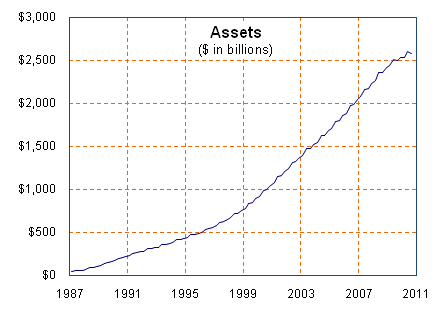
The assets of the Old-Age, Survivors, and Disability Insurance Trust Funds represent the accumulation over time of the difference between income and outgo. The growth of the assets from the end of December 1986 through the end of September 2010 is shown below by calendar quarter.

Assets grew from about $47 billion at the end of December 1986 to about $2,585 billion ($2.6 trillion) by the end of September 2010.

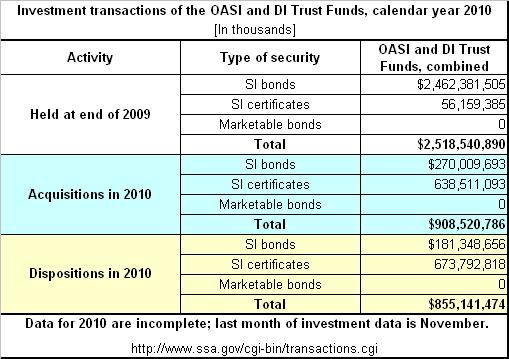
So where’s the money, you ask? Well, to be blunt, there is none. You see, by law, the trust funds are not allowed to hold cash. Instead, they must invest their money into what are known as, non-marketable, special issue (SI), government securities. That’s right! The whole $2.6 trillion “surplus” has been mandatorily invested in the U.S. Treasury. That would be the same Treasury which is currently $14,025,215,218,708.50 in debt. Through 12/31/2010, the Treasury owed a total of $9,390,476,088,043.35 on marketable public securities, and another $4,634,739,130,665.17 on intergovernmental debt (including the amount owed to Social Security). In other words, the government owes the Social Security Trust Fund $2.6 trillion, other governmental agencies $2.0 trillion, and the public another $9.4 trillion.

So where’s the money, you ask? As I said before, there is none; it has already been spent. Yet these special-issue securities are miraculously able to both earn and pay interest at the same time; that is if you can call issuing new debt to the public “earnings”, and paying with IOU’s “interest income”. Interest on these non-marketable special-issue investments is paid (i.e. accrued) semi-annually, at the end of June and the end of December. “Because the trust funds hold no cash, investments are redeemed each month to pay for benefits and administrative expenses. When investments are redeemed, interest is paid. The amount of interest paid is used to offset the amount of investment redemptions.”

In other words, the Treasury pays interest to the Social Security Trust Fund, but not in the form of cash, rather in the form of additional special-issue securities. (Huh?) Interest is only physically paid out when money is needed for benefits and other costs.” And where does the money come from to pay the interest? You guessed it! It comes from income taxes, which you also pay. That’s right! The government requires you to pay 6.2% of your wages into a mandatory retirement plan, and then taxes you on the same income again to pay the interest which your investment is earning. Does this sound like a shady business practice yet?

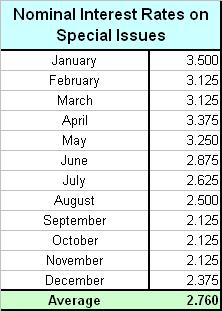
For example, let’s say that John Q is 50 years old and has $250,000 in a 401K plan. Now let’s say that he devises a scheme whereby he is able to borrow and spend the entire $250,000, and pay it back with interest over time. Let’s also say that he is allowed to pay back simple interest of 2.8%, by merely issuing additional promissory notes. By the time John Q retires at age 65, he will have amassed a retirement fortune of $355,000 (on paper that is). As far as where his first retirement check will come from, why that would be from himself. As John Q’s retirement plan begins to make payments it will need to redeem a portion of the promissory notes issued by John Q. Since John Q is no longer working, and no longer has income with which to pay the debt, he’s out of luck. Perhaps John Q would have been better off by investing real money into a legitimate investment vehicle.

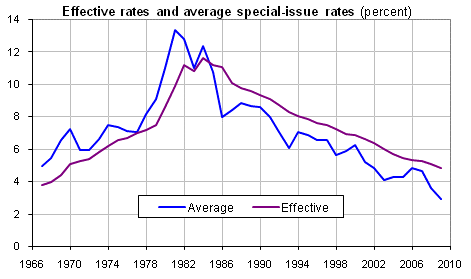
Why in God’s name would anyone make an investment which required them to cover the return on the same out of their own pocket? And worse yet, why would anyone do this when the initial investment and earnings are used to pay for other people’s retirement first? Won’t the “fund” be broke by the time you retire? Yeah, that’s the point. And to make matters worse, our return on investment appears to be crashing; which is good in the sense that we are the ones paying the interest, and bad in the sense that the return on our retirement savings is plummeting. (Huh?)

Diversification 101“Never put all your eggs in one basket.” It looks like the federal government has violated this rule in requiring that federal agencies invest only in federal government securities (special ones at that). The federal government can’t even balance a budget, let alone return a surplus; so why in the world would anyone invest their sacred retirement money in an entity which is currently $14 trillion in debt, and will not be able to earn a surplus, let alone breakeven for the foreseeable future? The truth is that if given a choice, most American’s wouldn’t. The problem is that we don’t think that we have a choice. Why don’t we have a choice? Who does this country belong to? Whose money is at stake? Perhaps it’s time to revisit privatization?

Photo Credit: http://www.johncrabtreephotography.com/

References:

http://www.ssa.gov/oact/ProgData/newIssueRates.html

http://www.treasurydirect.gov/NP/BPDLogin?application=np

http://www.ssa.gov/cgi-bin/transactions.cgi

The Folly of Government Investment

It's Back on the Road

Car’s Out of the Ditch; What’s Left of It Anyway!

– By: Larry Walker, Jr. –

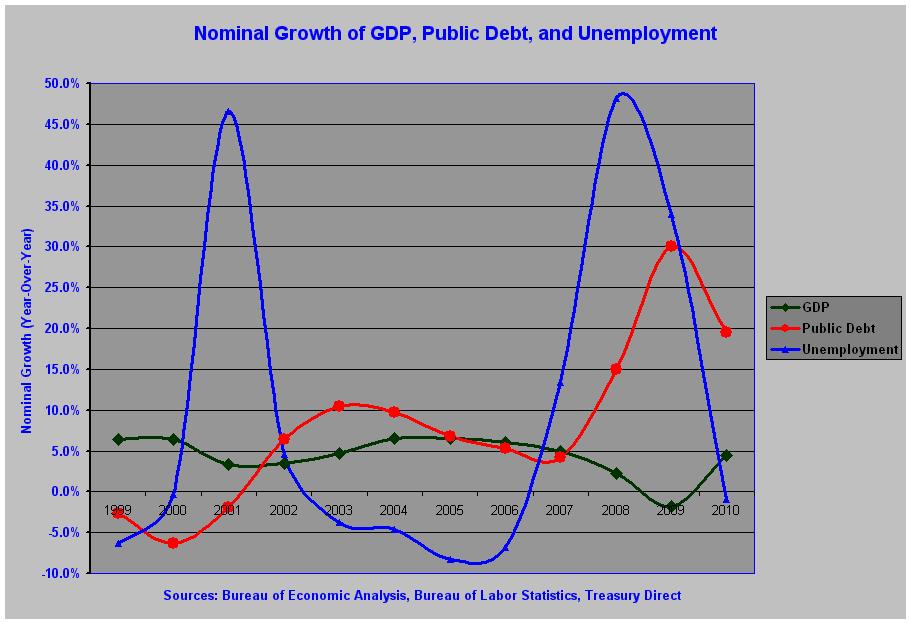
Realistically, it doesn’t look like anyone’s going to be driving this car ever again, so the highway that it’s on is irrelevant. And as far as what they’re sipping on, why that would be Kool-Aid. It looks like we’re going to need a new car, or perhaps just a new President, one who knows something about restoration. What in the heck is a government investment? I mean has anybody ever attempted to figure out what kind of return the government is getting on its current “investments”? I find it rather alarming when I compare the nominal rates of change in GDP, Unemployment, and the Public Debt during the recessions of 2001 and 2008.

click to enlarge

click to enlarge

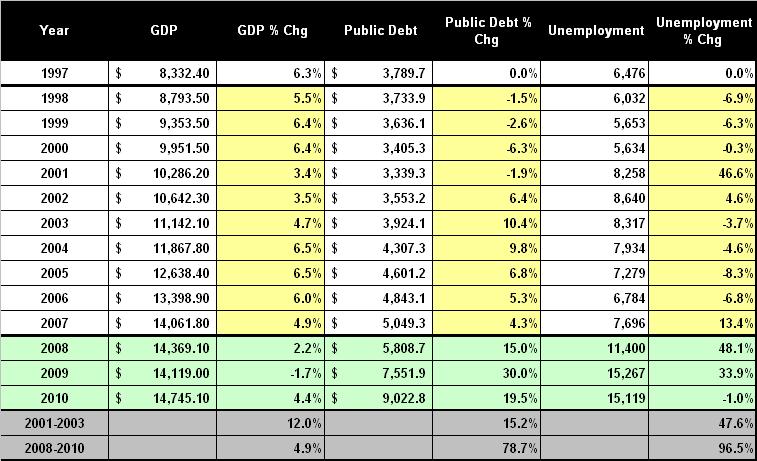
For example, we see that in 2001, while the number of unemployed Americans increased by 46.6%, GDP was still growing, and the Public Debt was still shrinking. Then in 2002, the second year after the recession, the number of unemployed only grew by another 4.6%, with a modest increase in the Public Debt of 6.4%. And in 2003, the third year post-recession, the Public Debt increased by 10.4%, while the number of unemployed dropped by -3.7%. Unemployment continued to decline in each subsequent year until the beginning stages of the financial crisis appeared, near the end of 2007. In 2007 the number of unemployed Americans rose by 13.4% with modest changes in both the Public Debt and GDP. Following is the question of the day from @danlothiancnn, and then we’ll compare the periods of 2001 through 2003, with 2008 through 2010.

Year 1: The Recession of 2001 vs. 2008

The following statistics are drawn from the table and chart above. We are comparing nominal figures of the number of unemployed, gross domestic product, and the public debt. The percentages shown represent the rate of change from one year to the next.

  • In 2001, the increase in the number of unemployed was 46.6%, or nearly the same as the 48.1% increase in 2008.

  • In 2001, GDP growth was positive at 3.4%, versus an increase of just 2.2% in 2008.

  • The biggest difference was that the public debt decreased by -1.9% in 2001, versus an increase of 15.0% in 2008.

Year 2: Post-Recession 2002 vs. 2009

Moving into the year after the recession began, we notice a huge difference in the number of unemployed.

  • In 2002, the number of unemployed increased by just 4.6%, while in 2009 the increase was a whopping 33.9%.

  • You will also note that GDP increased by 3.5% in 2002, versus a decline of -1.7% in 2009.

  • Next, you will note that while the public debt increased by just 6.4% in 2002, the increase in 2009 was an astronomical 30.0%. What this indicates is that the government overacted in 2009 by implementing a barrage of stimulus, regulations, and bailouts which did little more than increase unemployment and slow economic growth.

Year 3: Post-Recession 2003 vs. 2010

Now let’s look at the 3rd year after the beginning of each recession.

  • In 2003 the number of unemployed declined by -3.7%, versus a decline of just -1.0% in 2010.

  • GDP grew by 4.7% in 2003, versus an increase of 4.4% in 2010.

  • Meanwhile, the public debt grew by 10.4% in 2003, versus an increase of 19.5% in 2010.

Summary

To summarize, the percentage changes over each three-year period were as follows:

  1. GDP was elevated by 12.0% in 2001-2003, while increasing by just 4.9% in 2008-2010.

  2. The Public Debt grew by 15.2% in 2001-2003, versus an escalation of 78.7% in 2008-2010.

  3. The number of the unemployed increased by 47.6% in 2001-2003, compared to mushrooming by 96.5% in 2008-2010.

Conclusion

There is no such thing as government investment. In spite of the government’s colossal spending campaign, which over the past three years has increased the public debt by 78.7%, in the end, the number of unemployed Americans expanded by an absurd 96.5%, and gross domestic product grew by just 4.9% (the same that was achieved in the single year of 2007). So it looks like the federal government’s return on investment over the past three years has been negative. All we got out of the deal was a ballooning of the public debt by 78.7%, and a gargantuan uptick of 96.5% in the number of unemployed Americans. So much for that theory. Government investment amounts to nothing more than meaningless rhetoric.

Perhaps it’s time for the government to get in the back seat; what’s left of it anyway. (1) Stop spending money that you don’t have, under the guise of making “investments”. (2) While you’re at it, you can stop playing God; enough with over-regulation. (3) And further, you guys can stop patting yourselves on the backs, because so far you have achieved nothing (nada). The car wasn’t in that bad a shape when Obama took the keys. The policies which Obama, Pelosi, and Reid implemented in 2009 are directly responsible for expanding both the number of unemployed, and the amount of public debt. Now that the car has been totalled, good luck with the C.Y.A. campaign.

Photo Credit: http://stock-free.com

GDP: Bureau of Economic Analysis

Unemployment: Table 1-A, Bureau of Labor Statistics

Public Debt: Treasury Direct – Debt to The Penny

Tax Rates, Earmarks, and Weiners

Money to Burn

Put Up, or Shut Up!

– By: Larry Walker, Jr. –

Okay, it’s time for all you rich whiners (a.k.a. Anthony Weiner) and cry babies to man up. For those who think that a top federal tax rate of 35% is too low, there is a solution. How about forking over some of that excess lucre? How about putting your money where your mouth is? The time to stand up for your convictions has come. It’s time to make a voluntary donation towards the national debt.

If you meet all of the following criteria, then I’m talking to you:

  1. You don’t like the tax rate extension.
  2. You are overcome with guilt, and want to pay more taxes.
  3. You are a congressman, senator, federal employee, millionaire or billionaire.
  4. You don’t have a business or payroll to meet, and have money to burn.

If this is you, then it’s time to step up. You can make a voluntary gift to the Bureau of the Public Debt, earmarked towards the national debt. That’s the only kind of earmark that we find acceptable. And the best part is that your donation is fully tax deductible. That’s right! You won’t have to pay taxes on any income you voluntarily contribute towards the national debt, not one dime. So what are you waiting for?

Only $2.8 million was donated in the last fiscal year. That’s pathetic. Let’s get that up in the hundreds of millions, or billions. Harry Reid and Nancy Pelosi should be the first to write checks, since they’re the ones who blew a $5 trillion hole in deficit. Where’s Warren Buffet? What about Anthony Weiner? What’s up with Bill Clinton? Is there an Obama in the house? It’s time to put up, or shut up. All those who love to talk trash, while advocating the squander of other people’s money, need to be the first in line. It’s time to trifle some of your own. Otherwise shut the hell up.

How do you make a contribution to reduce the debt?

There are two ways for you to make a contribution to reduce the debt:

  • You can make a contribution online either by credit card, checking or savings account at Pay.gov
  • You can write a check payable to the Bureau of the Public Debt, and in the memo section, notate that it’s a Gift to reduce the Debt Held by the Public. Mail your check to:

    Attn Dept G
    Bureau of the Public Debt
    P. O. Box 2188
    Parkersburg, WV 26106-2188

We will be following up in a couple of months to see how well you did.

Disclosure: 1. Before making a donation to the federal government or any other organization, be sure to review how it spends its money. 2. Voluntarily contributing to the same government that taxes you, may negate any (or all) potential tax savings. 3. Sorry, but I will not be joining you, as I do not fit the criteria.

Links: Treasury Direct ; Forbes Billionaire List